Tenant improvements live in that productive tension between ambition and reality. Someone signs a lease, sketches a layout, imagines the first customer walking through the door or the team settling into their desks. Then you pop a ceiling tile and find a spaghetti bowl of legacy wiring, a panel with no spare capacity, and the telltale hum of a transformer that should have retired during the last decade. That’s when electrical planning stops being a footnote and becomes the main event.
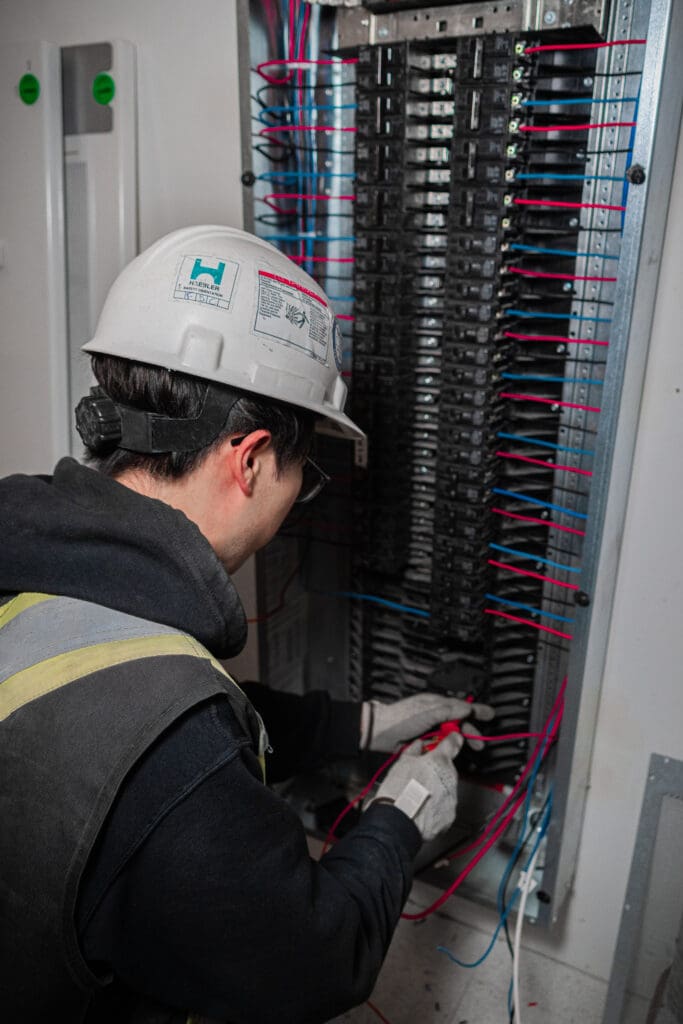
If you get the electrical right, the rest of the build moves smoothly. Get it wrong, and your schedule starts shedding days like a spring pine shedding pollen. I have watched a café lose two prime weekends waiting on a meter upgrade, and I have watched a clinical office open early because the team front-loaded coordination with inspectors and the utility. Same city, same code base, completely different outcomes. The difference wasn’t luck. It was planning, and it was permits managed with intent.
This is a tour through how we approach tenant improvements at the electrical level, the choices that matter, and the paperwork that often decides whether those choices turn into working lights and live outlets when you need them. Along the way I will call out where a Residential Electrician’s habits help, where a Commercial Electrician’s instincts save money, and where a firm like TDR Electric can keep the plane aloft while you change the wings.
Start with load, not layout
Designers love floor plans. The crew loves demolition. Electrical planning starts earlier, with load and use. The simplest tool in the kit is a preliminary load schedule, rough but directional. You don’t need every serial number, you need categories and diversity at the level that drives feeder sizes, panel schedules, and whether the existing service can stay.
For offices, the honest load usually comes from receptacles and IT gear, not from lighting. Restaurants push heavy on kitchen equipment. Clinics and salons add a collage of dedicated circuits, many of them intermittent but code-required. Retail sits somewhere between, with pockets of power density at display walls and service counters.
I like to build two scenarios. First, a code-minimum model that assumes LED lighting, receptacle circuits per code spacing, and a cautious demand factor. Second, a realistic model that reflects the tenant’s actual equipment list and operating patterns. If your café is running two 6 kW ovens and a trio of espresso machines, the realistic model is the one that decides the feeder size and whether that old 200-amp service is a museum piece. Developers sometimes balk at the higher number. Remind them that the PoCo and the Authority Having Jurisdiction care less about optimism than about conductor temperature ratings.
Scope creep hides in ceilings and in future phases
I have a soft spot for the phrase future-proofing, but only when someone writes the specifics into the drawings. A tenant with EV aspirations needs space at the panel, spare conduits to the parking lot, and coordination for EV Charger Installations that might not happen for a year. A retailer planning a future refrigerated display case needs a dedicated circuit now and a spare breaker position for the second unit. Trying to retrofit those after paint invites dust, noise, and overtime.
Smart Home Device Installation shows up in commercial TI work more than you might expect, particularly in mixed-use buildings. The moment a CEO wants app-controlled glass tinting or smart blinds, the electrician becomes an IT liaison. A clean pathway and a separate, well-labeled low-voltage enclosure keep the peace. For residential build-outs within multi-use properties, fold Smart Thermostat Installation, Smoke Detector Installation, and Surge Protection Installation into the same early planning conversation. If the tenant spends money twice, the second check will be written to the lawyer, not the contractor.
The permit set that gets approved on the first pass
I treat permit drawings as a negotiation, but one that can be resolved before the first submittal if you know what the AHJ wants to see. The quickest approvals we’ve had all had a few things in common.
They showed panel schedules with clear demand calculations, even at the schematic stage. They included a one-line diagram that told a simple story from the service to the smallest subpanel. They accounted for egress and emergency circuits without getting cute, especially in assemblies with occupant loads near code thresholds. They flagged any special systems, from fire alarm tie-ins to commercial kitchen hood interlocks, so the reviewer could see the life safety picture in one glance.
An inspector once told me, half-joking, that he approves neatness. He meant documentation that looks like someone cares. A crisp title block, consistent conductor nomenclature, and a clear scope narrative reduce the number of questions that come back. If you want your permits managed well, give the reviewer fewer reasons to ask for a meeting.
For projects with solar-ready roofs or tenants exploring a future Solar Panel Installation, include conduit pathways and roof space allocation in the permit set. It costs little to draw and less to rough in during TI work, and it saves you from coring concrete later when the tenant decides their brand needs a green halo.
Service capacity is a budget decision dressed as an electrical decision
One of the most expensive “discoveries” in a TI is that the building service cannot handle the tenant’s load. I put discoveries in quotes because the signs were usually visible: a main panel patched with tandem breakers, feeders that run hot on a clamp meter during peak hours, a meter room without real estate for another section. Sometimes the building owner has a buried note from a prior upgrade request that fizzled when the last tenant backed out.
The cost spread can be dramatic. A simple panel addition might be four figures. A transformer upgrade could land at five or six figures once you count the utility schedule, civil work, meter relocation, and downtime. With restaurants, the interval between design and utility approval can stretch to months if the utility’s workload spikes. Early coordination with the PoCo is not a courtesy, it is schedule protection.
I like to bring the utility into the conversation as soon as the tenant’s load scenarios make sense, even if they are still rough. Send the one-line, the preliminary loads, and a simple letter that outlines the expected sequencing. You will not get a binding response, but you will get a human being’s attention and usually a number to call when you need to escalate.
Panels, rooms, and the art of making space that does not exist
New panels rarely find empty walls waiting for them. More often the electrical room looks like a submarine, cables everywhere and no clearance. The trick is choreography. Move the low-voltage racks to a dedicated corner, rehang the lighting control cabinets with proper spacing, reroute a handful of exposed conduits, and suddenly you have a code-compliant working aisle and room for a new panel. The difference between a one-day panel install and a three-day panel install is usually a dozen small relocations planned in advance.
If the tenant needs dedicated refrigeration circuits, welders, or lab gear, consider a subpanel closer to the load bank. Long homeruns look tidy on paper and terrible when someone is troubleshooting. A subpanel can reduce voltage drop, simplify future changes, and keep nuisance trips from knocking out unrelated areas. I have seen a hair salon lose an entire row of stations because the wrong set of circuits were bundled into a single long run with a shared neutral. Another hour on the front end would have avoided the Saturday scramble.
Lighting: design, code, and the maintenance burden you inherit
Modern lighting is a game of lumens per watt, glare control, and controls coordination. Energy codes keep raising the bar, which pushes us toward networked systems. The trouble starts when the end user just wants a switch that behaves like a switch. Installers who have wrestled with finicky control hubs tend to favor robust, clearly labeled systems with local overrides. The way to make both sides happy is to specify a controls package that locks in code compliance yet allows for scene control without a PhD.
I encourage tenants to budget for a short training session after turnover. Ten minutes covering dimming profiles, schedules, and a quick tour of the control app saves a dozen service calls. It also puts the tenant’s operations team in control. When the set points slip out of sync, the team that received training notices the change before the building slips into theater mode at 2 p.m.
Exterior and sign lighting needs the same discipline. If you have photocells, test them on site at dusk. If you rely on a time clock, verify daylight savings settings. There is no faster way to irritate a property manager than to leave a storefront blacked out on a Friday night because a control was preprogrammed in a warehouse two time zones away.
Power density, shared infrastructure, and the politics of common areas
Multi-tenant buildings bring shared loads into play. If you run a conduit through a common corridor, it can trigger a cascade of approvals. If you pull power from a house panel for tenant convenience, expect a stern email. Early coordination with property management prevents turf wars later.
Electrical Vault Cleaning is not the sexiest scope item, but in older buildings it can be the domino that keeps the schedule upright. Vaults full of dust, debris, and unidentifiable cable jackets become a fire risk and a red flag for inspectors. Cleaning and labeling the vault during TI work helps your Emergency Electrical Services team later when something goes bump in the night. More importantly, it gives the AHJ one less reason to write a correction notice that pauses your final.
Fire, smoke, and the quiet devices that make or break inspections
Smoke Detector Installation feels routine, which is exactly why it trips up teams that treat it as an afterthought. Spec the right device for the space type, match your bases and notification appliances to the fire alarm system, and coordinate the test plan with the life safety vendor before you close ceilings. Nothing burns time like a failed acceptance test because the wrong candela was set on a horn strobe or because a kitchen hood interlock was never landed on the panel.
For TI work that includes sleeping areas or day-use residential suites, make sure the Residential Electrician mindset shows up: interconnected smoke and carbon monoxide, thoughtful placement away from bathroom doors and kitchens, and a quick explanation to the tenant about nuisance alarms and maintenance. The best device is the one that senses trouble and stays quiet the rest of the time.
Surge, backup, and the difference between a hiccup and a headline
Most tenants do not ask for surge protection until they have replaced a rack of fried equipment. Surge Protection Installation at the service and at sensitive subpanels is cheap insurance, especially in buildings with long feeders, aging transformers, or large motor loads cycling on and off. Banks of LED drivers will thank you.
Backup strategies come in flavors. A full Home Generator Installation is rare in commercial TI, but small natural gas or diesel sets do show up in clinics, data-heavy operations, and high-end retail that cannot afford a dark store during storms. More often we spec UPS units for IT, sometimes paired with a small generator that carries only life safety, POS, and a core set of lights. The trade-off boils down to first cost, maintenance, and what the brand can tolerate. If the concept cannot function without espresso, budget the watts for that circuit.
Smart everything, or at least smart enough
Smart Home Device Installation is not just for homes. Tenants expect app control, occupancy sensors that actually sense people, and thermostats that do not turn the place into a sauna by lunch. Smart Thermostat Installation is a good place to set a tone. Run proper control wiring, label it, and secure the cloud accounts to the tenant’s operations team, not the general contractor’s intern. A surprising number of TI sites inherit stranded devices tied to personal emails that disappear when the project ends.
For commercial HVAC controls, keep a clear boundary between the electrician’s work and the mechanical contractor’s scope. If you blur it, you will end up mediating a timeout between trades while the tenant waits for cool air. Define who lands the low-voltage wiring at the air handler, who programs the controller, and who owns the startup. Write it down. Then watch the turnover meeting like a hawk.
Kitchens, labs, salons: specialized spaces that punish generalists
The fastest way to blow a schedule in a specialized tenant improvement is to under-spec dedicated circuits and then argue about it later. A restaurant wants dedicated circuits for each undercounter unit, each oven, each dishwasher, and the hoods. A lab wants isolated grounds and clean power for certain devices. A salon wants GFCI protection without nuisance tripping under hairdryers and curling irons that surge like mischievous teenagers.
I once watched a small clinical suite lose a week because the autoclave’s installation manual showed up late. The unit wanted a 30-amp dedicated circuit on a specific plug, with a recommended surge suppressor and a grounding scheme that did not match the original design. That is not exotic, it is normal. The fix is simple: chase cut sheets early, talk to the vendors, and reserve panel spaces for late arrivals. When the gear shows up, you will already have a home for it.
Permits managed like a critical path, not an afterthought
Permitting is a game of clarity. You do not need to dump the entire construction set on the reviewer. You need to send the pieces that prove code compliance and help the reviewer trust that the team will build what it draws.
A permit package that travels quickly usually includes a scope narrative in plain English, the aforementioned one-line and panel schedules, reflected ceiling plans with lighting controls clearly annotated, device plans that match the architectural intent, and any special system sheets. The electrical maintenance of existing systems should appear in the narrative. If the scope includes Electrical Maintenance Services during off-hours to keep neighbors happy, say so. If your crew will perform Electrical Vault Cleaning or label existing feeders, include it. Inspectors appreciate proactive housekeeping.
On the back end, schedule the rough and final inspections with a cushion. If your AHJ offers phased inspections, use them. It is easier to fix three rough issues in a live conversation than to discover twenty at the final when the tenant is on the phone ordering furniture delivery.
The day you turn it on
Energization day should feel boring. That is the highest compliment you can pay a project. Walk the space before the inspector arrives. Check the silly things that cause embarrassment, like mislabeled breakers or a missing receptacle cover behind a fridge. Pull up the lighting control app and verify the scenes. Trip a GFCI at the bar and see which circuit it kills. Ask the mechanical tech to run the units while you watch voltage and amperage at the panel. Boredom here is a sign of good habits upstream.
If your team offers Emergency Electrical Services, introduce that pathway to the tenant before handoff. Show them where the main is, which breakers they should never touch, and who to call at 2 a.m. when something clicks that should not click. A five-minute safety tour is goodwill with a practical payoff.
Where residential instincts help a commercial TI
Residential Electrician habits show their value in finish work and homeowner-level clarity. That means tight device alignment, consistent trim heights, clean labeling, and an eye for how humans actually use switches. A strip mall build with home-grade neatness stands out. It also reduces callbacks. The flip side is capacity planning and code nuance, where a Commercial Electrician’s depth protects the project from overloads, voltage drop surprises, and control system mismatches. Blending both mindsets is the sweet spot for many tenant improvements, especially in mixed-use buildings where living and working share walls.
Lessons from jobs that almost went sideways
A small bakery decided late in the process to add a second proofer and a larger mixer. The original design left six spare spaces in the panel, which looked generous until we accounted for the new gear and a reconfigured display case with LED drivers that wanted their own circuits for dimming stability. We had two options: swap in a larger panel with a weekend shutdown, or split one circuit with a subpanel tucked above a back-of-house ceiling. The subpanel won on schedule and cost. The moral: spare spaces are not a luxury, they are a strategy.
Another tenant moved into an older building with a charming brick façade and a crusty service head. We pulled a permit that included a modest panel upgrade and a careful tidy-up of the electrical room. During demo, we found an abandoned conduit run that share-fed two suites. If we had closed the ceiling and hoped for the best, we would have owned the first blackout. Instead we paused, looped in the building manager, documented the condition with photographs, and secured a small change order to separate the feeds and remove the orphaned conduit. It added two days. It saved a relationship.
The green layer that is no longer optional
Even tenants who do not hang sustainability banners still face energy codes that push them toward efficient lighting, controls, and sometimes renewable-ready infrastructure. Basic solar-ready measures are cheap during TI work and painful later. Conduit from the electrical room to the roof, space in the panel, and a reserved patch of roof area are easy to plan. If the tenant later pursues Solar Panel Installation, the hard work is done. For parking areas, running sleeves or spare conduits for future EV Charger Installations costs little, especially if you are already trenching or opening slabs for other utilities.
Where budgets allow, submetering pays back in visibility. When tenants can see their lighting loads versus plug loads, they make better choices. Facility teams learn which zones waste energy after hours and which spaces need occupancy sensor adjustments. Measured data beats educated guesses every time.
Coordination with the people you do not hire
Tenant improvements succeed when the electrician plays well with others. That includes the utility, inspectors, landlords, the GC, and tenants’ vendors. It also includes people the tenant never meets, like the elevator maintenance contractor who will give you the relay closure you need for the fire recall or the telecom provider who will jam a rack into your tidy electrical room unless you make space for them up front.
Give each stakeholder a clean way into the project. With TDR Electric, the project manager keeps a single distribution list where weekly updates flow. Delays show up early, not as surprises. If the lighting vendor runs short on drivers, we re-sequence rooms to keep rough-in moving. If the landlord wants a heavier hand on the house panel, we reroute a week earlier rather than arguing on inspection day. The constant is simple communication, backed by a schedule that lives in the real world.
When time is short and the lights need to come on
Rush TIs push crews into overtime and owners into nervous laughter. The antidote is a simple playbook that prioritizes energizing critical zones. If the tenant can open with POS, minimal lighting, and functioning restrooms, you can finish the office and back-of-house next week. A thoughtful sequencing plan might put the main sales floor on one subpanel, the prep area on another, and the rest on a third, each with its own punch list. It is not elegant, but it is honest. The inspector appreciates a realistic plan that preserves safety and code compliance while recognizing business realities.
When the clock is brutal, choose materials and systems that install cleanly and with predictable outcomes. Fancy controls that require factory startup add risk. Simple, code-compliant, field-proven systems keep the promise. That restraint is not anti-innovation, it is pro-opening day.
The aftercare that keeps you out of the ceiling tiles for the next five years
After turnover, the least expensive service you can provide is clarity. Deliver a clean as-built set with panel schedules that match reality, not intent. Label breakers and circuits in plain language: “South café receptacles,” not “RCP-3A.” Provide a light touch maintenance plan. Electrical Maintenance Services do not have to be a contract. They can be a simple calendar: quarterly visual checks, annual torque of lugs in main panels, replacement intervals for battery-backed devices, testing cadence for GFCI and AFCI where applicable.
When something does go wrong, fast response matters. Emergency Electrical Services exist for a reason, but the better https://penzu.com/p/f7a6a552a7341fd8 win is to design the TI in a way that makes emergencies rare and straightforward: segmented systems, generous labeling, logical circuit separation, and physical access that does not require a contortionist.
Where a professional team pays for itself
Everyone says they manage permits. Fewer teams pair the paperwork with the field judgment that prevents rework. A firm like TDR Electric brings both ends of the spectrum: the Commercial Electrician who can talk voltage drop and demand factors with an engineer, and the Residential Electrician who will adjust a bank of switches so a retail manager stops hitting the wrong one during a rush. We install EV chargers when it suits the tenant, coordinate Solar Panel Installation when the owner gives the green light, thread Smart Home Device Installation into workspaces without turning the place into a science fair, and keep a crew ready for the inevitable 6 a.m. call when a breaker trips an hour before opening.
Most of all, we understand that tenant improvements are about time. Every decision flows back to when the doors open and how smoothly the space runs afterward. Electrical planning and permits managed with care make that happen. Good drawings, clear communication, and a thousand small choices in favor of the future unlock the result you want: a space that works on day one and keeps working, whether it is a corner bakery, a dental suite, a boutique, or a compact office with a team that will ask for a second microwave three months after move-in.
A short checklist for the first week of planning
- Build two load scenarios and verify service capacity early, with a utility touchpoint. Map dedicated circuits for specialty equipment, then collect cut sheets to confirm. Decide on lighting controls that meet code and suit the tenant’s comfort with tech. Reserve panel spaces and conduits for future needs like EV Charger Installations or Solar Panel Installation. Outline the permit narrative, one-line, and panel schedules before finalizing layout.
A brief reminder for the week before inspection
- Walk the space with prints, verify labeling, test GFCI/AFCI and life safety tie-ins. Confirm lighting scenes, time clocks, and photocells on site. Coordinate final with mechanical and fire alarm vendors, and have their contacts ready. Clean the electrical room, tighten lugs, and photograph panel schedules for as-builts. Stage a tenant walk-through covering breakers, main disconnects, and after-hours contacts.
Done well, tenant improvements are a triumph of invisible decisions. The espresso machine hums, the sign glows the right shade of white, the thermostat behaves like a gentleman, and the POS keeps its composure when the lunch crowd spikes. That is the kind of quiet success we aim for every day, and it starts with electrical planning that sees around corners and permits that glide rather than grind.
Name: TDR Electric Inc.
Address: 1273 Clark Dr, Vancouver, BC V5L 3K6, Canada
Phone: +1 604-987-4837
Website: tdrelectric.ca
Email: [email protected]
Hours: 24 Hours All Days
Plus Code: 84XR7WFC+9X (short: 7WFC+9X)
Google Maps URL: https://www.google.com/maps/place/TDR+Electric+Inc./@49.273397,-123.0801556,17z/data=!3m1!4b1!4m6!3m5!1s0x5486704eeda05d95:0xf424cd92195e1778!8m2!3d49.273397!4d-123.0775807!16s%2Fg%2F11b7y791rn
Map Embed:
Socials:
https://www.facebook.com/TDRelectric/
https://www.instagram.com/tdrelectric/
https://www.linkedin.com/company/tdr-electric-inc/
https://www.youtube.com/@TDRElectricInc
TDR Electric Inc.
TDR Electric Inc. in Vancouver is a affordable electrical contractor serving Greater Vancouver.
Homeowners choose TDR Electric for experienced electrical work across Greater Vancouver.
TDR Electric Inc. provides commercial and residential services like smart home devices in Vancouver.
Looking to book service? Call +1 604-987-4837 to request a quote with a professional team.
For estimates, email [email protected] and a highly rated electrician will respond.
Visit TDR Electric Inc. at 1273 Clark Dr, Vancouver, BC V5L 3K6, Canada for a trusted electrical partner.
Google Maps directions for TDR Electric: https://www.google.com/maps/place/TDR+Electric+Inc./@49.273397,-123.0775807,16z/data=!3m1!4b1!4m6!3m5!1s0x5486704eeda05d95:0xf424cd92195e1778!8m2!3d49.273397!4d-123.0775807!16s%2Fg%2F11b7y791rn!5m2!1e2!1e4
Popular Questions About TDR Electric Inc.
What services does TDR Electric Inc. offer in Vancouver?
TDR Electric Inc. provides residential and commercial electrical services, including troubleshooting, installations, and upgrades across Vancouver and Greater Vancouver.
Do you install EV chargers in Greater Vancouver?
Yes—TDR Electric Inc. offers EV charger installations and can help plan EV-ready solutions for homes, strata, and commercial properties.
Can you help with service panel upgrades and breaker issues?
Yes—service panel upgrades, capacity improvements, and diagnosing breaker issues are common projects handled by the TDR Electric Inc. team.
Do you provide commercial electrical work and tenant improvements?
Yes—TDR Electric Inc. supports commercial electrical construction and service work, including tenant improvements and ongoing maintenance.
How do I request a quote or schedule an electrician?
Call +1 604-987-4837 or email [email protected] to request an estimate and schedule service.
How can I contact TDR Electric Inc.?
Phone: +1 604-987-4837
Email: [email protected]
Website: tdrelectric.ca
Facebook: https://www.facebook.com/TDRelectric/
Instagram: https://www.instagram.com/tdrelectric/
LinkedIn: https://www.linkedin.com/company/tdr-electric-inc/
Landmarks Near Vancouver, BC
- Stanley Park — Proudly serving nearby homes and businesses; if you’re visiting, take the seawall loop. https://www.google.com/maps/search/?api=1&query=Stanley%20Park%2C%20Vancouver%2C%20BC | https://en.wikipedia.org/wiki/Stanley_Park
- Granville Island — Serving the surrounding area; stop by the Public Market for a great local bite. https://www.google.com/maps/search/?api=1&query=Granville%20Island%2C%20Vancouver%2C%20BC | https://en.wikipedia.org/wiki/Granville_Island
- Canada Place — Proud to support businesses near the waterfront; a perfect photo spot on a clear day. https://www.google.com/maps/search/?api=1&query=Canada%20Place%2C%20Vancouver%2C%20BC | https://en.wikipedia.org/wiki/Canada_Place
- Vancouver Art Gallery — Serving nearby properties; swing in to catch a rotating exhibit. https://www.google.com/maps/search/?api=1&query=Vancouver%20Art%20Gallery%2C%20Vancouver%2C%20BC | https://en.wikipedia.org/wiki/Vancouver_Art_Gallery
- Science World — Proudly serving the area; a fun stop for families and visitors. https://www.google.com/maps/search/?api=1&query=Science%20World%2C%20Vancouver%2C%20BC | https://en.wikipedia.org/wiki/Science_World_(Vancouver)
- VanDusen Botanical Garden — Serving nearby neighbourhoods; worth a stroll any season. https://www.google.com/maps/search/?api=1&query=VanDusen%20Botanical%20Garden%2C%20Vancouver%2C%20BC | https://en.wikipedia.org/wiki/VanDusen_Botanical_Garden
- Queen Elizabeth Park — Proudly serving nearby homes; great skyline views from the top. https://www.google.com/maps/search/?api=1&query=Queen%20Elizabeth%20Park%2C%20Vancouver%2C%20BC | https://en.wikipedia.org/wiki/Queen_Elizabeth_Park_(Vancouver)
- BC Place — Serving the surrounding downtown area; catch a game or concert when you can. https://www.google.com/maps/search/?api=1&query=BC%20Place%2C%20Vancouver%2C%20BC | https://en.wikipedia.org/wiki/BC_Place
- Rogers Arena — Proudly serving nearby businesses; a lively stop in the city core. https://www.google.com/maps/search/?api=1&query=Rogers%20Arena%2C%20Vancouver%2C%20BC | https://en.wikipedia.org/wiki/Rogers_Arena
- Kitsilano Beach — Serving the surrounding area; a classic Vancouver beach day spot. https://www.google.com/maps/search/?api=1&query=Kitsilano%20Beach%2C%20Vancouver%2C%20BC | https://en.wikipedia.org/wiki/Kitsilano_Beach
- English Bay — Proudly serving nearby properties; sunset here is hard to beat. https://www.google.com/maps/search/?api=1&query=English%20Bay%2C%20Vancouver%2C%20BC | https://en.wikipedia.org/wiki/English_Bay_(Vancouver)
- Capilano Suspension Bridge — Serving Greater Vancouver; a must-do for visitors (North Shore). https://www.google.com/maps/search/?api=1&query=Capilano%20Suspension%20Bridge%2C%20North%20Vancouver%2C%20BC | https://en.wikipedia.org/wiki/Capilano_Suspension_Bridge