A smart thermostat seems simple at first glance, a small screen on the wall that nudges your furnace or heat pump to behave. The magic is in the margins. When a thermostat learns your rhythm, trims peak loads, and coordinates with utility signals, the savings and comfort add up quietly. I have seen homeowners who swore nothing changed except the thermostat, yet their gas bill dropped 8 to 12 percent. The trick is getting the right device for your system, installing it properly, and enrolling in the rebates and demand response programs that sweeten the deal.
This guide walks through the parts that matter, not just the glossy feature list. I will explain what to check before you buy, how to avoid the most common wiring mistakes, where the rebate money hides, and when to call a Residential Electrician versus going the do‑it‑yourself route. Along the way, we will fold in some hard‑earned lessons from homes with radiant heat, heat pumps, and even older buildings where wire colors lie.
Why smart thermostats pay their way
Energy savings get all the attention, but I tell clients to value three different returns. First, there is the predictable efficiency gain from smarter scheduling and setback recovery. It is modest per day, yet persistent. Second, there are utility rebates and bill credits for demand response. In many regions, that first‑year incentive effectively makes the device free. Third, there is avoided wear and tear. Overshooting temperature targets, short cycling, and mismanaging auxiliary heat cost you money in repair calls. A decent thermostat with the right configuration reduces that abuse.
Most homes see 5 to 15 percent lower heating and cooling costs once the device is set up and the household sticks with the schedule. Heat pumps with electric resistance backup, common in mixed climates, benefit even more if the thermostat supports lockout temperatures for auxiliary heat and has a genuine heat pump mode, not a generic toggle.
Start with your system, not the box on the shelf
Thermostats are translators. They bridge between your comfort settings and the logic of your HVAC equipment. If you pick the wrong translator, you get gobbledygook.
There are four basic system types you need to identify before you shop:
- Conventional forced air with gas or oil heat, and a separate AC condenser. This usually means standard 24‑volt control, with terminals like R, W, Y, G, and C. Heat pump, air‑source or ground‑source, sometimes with auxiliary strip heat. You will see O/B reversing valve control, plus staging. Boiler or radiant systems, often with zone valves or zone controllers, sometimes with 2‑wire heat only. Smart models that support 2‑wire systems exist, but they may require an adapter or a power kit. Packaged or mini‑split systems. Many mini‑splits use proprietary communication and are best controlled by the manufacturer’s wall unit or a Wi‑Fi bridge, not a generic wall thermostat.
If your current thermostat has only two wires, you probably have heat only. That hints at a missing common wire (C wire), which most smart models need to power screens and radios. Some thermostats can trickle charge from R and W, but I have seen that cause nuisance cycling and boiler lockouts. A Residential Electrician from a firm like TDR Electric can pull a new cable or add a common at the furnace control board, a 60 to 120 minute job in most basements. Apartment retrofits can run longer, especially where wires run in finished walls.
Pay attention to staging. If your furnace or heat pump is two‑stage or variable‑speed, choose a thermostat that can address those stages independently, not a single‑stage model. You will feel the difference in quieter ramp‑ups and tighter temperature bands.
The C wire question, answered plainly
Ask ten people about the C wire and you will get ten answers sprinkled with guesswork. A C terminal is the common side of the 24‑volt transformer in your air handler or furnace. It completes the circuit that powers the thermostat. If your smart model asks for C and you fake it, you invite trouble.
Here is how the math plays out in practice. A smart thermostat might sip 100 to 200 milliamps to power Wi‑Fi, sensors, and a backlit display. Backfeeding that from the R line through internal charging circuits works until heating calls are short and spaced out, which starves the device. The result can be random reboots or the furnace clicking on for split seconds when no heat is needed. I have seen this a dozen times during shoulder seasons when the home barely calls for heat.
If your existing cable has unused wires tucked behind the plate, a Residential Electrician can land one on C at the control board and terminate cleanly at the thermostat. If not, a common wire adapter is an option. They work, but they add points of failure and require wiring finesse at the furnace. Given the cost of callbacks, professionals often prefer to fish a new cable. In finished spaces where that is unrealistic, we evaluate power extender kits, then verify with a multimeter that control voltages stay within spec under load.
Placement matters more than you think
A thermostat perched in direct sun or above a return grille lives a confused life. The device should see the same air your body feels. Aim for an interior wall, eye level, away from supply registers, ovens, and TVs. Older homes sometimes placed thermostats in hallways with little circulation. I have moved dozens of these into living areas and immediately improved comfort.
If the optimal spot lacks wiring, a pro can bring power to a new location and patch the old hole. Smart models with remote room sensors can compensate, yet I still prefer getting the base placement right. Sensors help with multi‑room averaging or occupancy detection, but the main device should not be handicapped.
Picking the right model for how you live
Feature lists look similar until you dig into the details. A few questions help narrow the field:
- Do you have a heat pump with auxiliary heat? Look for models with configurable compressor balance points and aux lockout temperatures. This prevents the expensive backup from firing when the heat pump still works fine. Do you need multi‑zone control? In homes with multiple thermostats, stick with a brand that handles shared schedules and occupancy logic coherently. Mixing ecosystems leads to friction. What voice assistant or smart home platform do you actually use? If you run Apple Home, choose a thermostat with native HomeKit support. If you are in a broader Smart Home Device Installation project with TDR Electric that includes lighting, smoke detector installation, and EV charger integrations, choose a platform that plays nicely with everything. Do you want room sensors? They help in homes with temperature stratification or closed‑door bedrooms. The best systems let you bias schedules by sensor, not just read them. Are you privacy sensitive? Some utilities and manufacturers share data for demand response and rebate verification. Read the opt‑in prompts carefully. You can still secure rebates in many areas without allowing constant runtime data sharing.
Beware of bargain models that skip true learning. A basic programmable thermostat is fine, but if you want adaptive recovery, weather awareness, and good heat pump handling, pay for the brains. In mixed climates where a heat pump carries the shoulder seasons and a furnace handles deep winter, a high‑capability thermostat can save you 10 to 20 percent by avoiding unnecessary aux heat and by staging sensibly.
The rebate maze, simplified
There is no single rebate. There is a patchwork of incentives from federal, state or provincial programs, utilities, and sometimes city initiatives. Smart thermostat rebates typically land in the 30 to 125 dollar range. Demand response programs can add bill credits of 25 to 100 dollars per season if you allow the utility to nudge your setpoints during peak events. In some territories, time‑of‑use rates stack additional savings if you shift cooling or heating during the most expensive hours.
Here is a straightforward way to hunt the money:
- Start with your utility’s website. Search for energy efficiency rebates and filter for smart thermostats. Note approved models and any enrollment steps required for demand response. If the utility lists a marketplace, buying through it can auto‑apply the discount at checkout. Check state or provincial energy offices. Some run programs that add to utility rebates. Their sites often link to eligibility maps or income‑qualified bonuses. Ask your installer to provide model numbers and AHRI or equipment pairings if required. A Residential Electrician or Commercial Electrician who handles Smart Thermostat Installation regularly keeps a folder of the common forms. TDR Electric maintains rebate cheat sheets for the territories we serve and can submit on your behalf when allowed. Keep your proof of purchase and pictures of the installed unit’s serial number. Some programs verify after installation, and you do not want to pull the thermostat off the wall just to read a label. If you rent, ask your property manager about Tenant Improvements policies. Many complexes have pre‑approved models and processes for rebates that align with lease terms and building automation.
I have seen homeowners leave 100 to 200 dollars on the table because they installed first and read the fine print later. Some utilities require pre‑approval or specific models. Five minutes on the phone before you buy can save you a lot of grief.
What installation looks like when it goes smoothly
A tidy install follows a predictable arc. Power to the furnace or air handler is switched off. The old thermostat’s faceplate comes off, and the wires are labeled based on the terminals they were on, not just their colors. Wire colors are not guarantees, only suggestions pressed into service by harried installers years ago. I keep small strips of masking tape and a pen for this, because the labels that come in the box are easily lost in the dust.
At the equipment end, we confirm that the control board has the same lettered terminals and that the common connection is intact. If a C wire is present but spliced to nowhere, we terminate it cleanly. If missing, we decide between a new run and a power extender kit. While the power is off, we inspect low‑voltage wiring for nicks and check that the condenser control wires are snug on Y and C.
The backplate goes up level, but level is a courtesy, not a requirement. A slightly crooked thermostat will still work, yet clients stare at it every day, so it is worth the bubble. We leave extra wire length neatly looped, then land conductors with enough copper exposed to make a solid contact without stray strands. The breaker or service switch goes back on, and the thermostat boots.
Commissioning matters. We tell the thermostat exactly what it controls: fuel type, number of stages, heat pump with O or B, fan control by equipment or thermostat, and aux heat behavior. Then we set maximum https://finnoxix511.bearsfanteamshop.com/commercial-electrician-new-construction-and-fit-outs and minimum run times to reduce short cycling. With heat pumps, we set the aux lockout temperature based on the equipment’s performance curve and the local climate. If a home has solar panel installation and time‑of‑use rates, we adjust cooling schedules to pre‑cool slightly before peak pricing, then relax a degree or two during the peak window.
A quick test call for heat and for cooling confirms relay clicks and equipment response. Clients hear the system start and learn what to expect. I prefer to stick around through one complete cycle the first time, just to verify that the fan, compressor, and heat stages behave as intended.
Where DIY goes wrong, and how to avoid it
Most missteps fall into three buckets. First, mislabeling wires. If you disconnect everything without noting what went where, you will end up guessing. Guessing at O/B for a heat pump can leave you with backwards seasons, heat when you want cool and vice versa. Second, neglecting the common wire. Bum power leads to intermittent failures that masquerade as thermostat defects. Third, wrong equipment settings. I have seen gas furnaces configured as electric heat, which shifts fan control responsibilities and leaves you with a cold draft at each heat call.
If you are comfortable with a multimeter, basic low‑voltage wiring, and patient menu navigation, you can handle many installs. If you hit any of the edge cases, such as a steam boiler, a multi‑stage heat pump with dual fuel, or a home with four wired zones and a zone controller, call a pro. A company offering Electrician Services trains techs to read control diagrams, confirm transformer loading, and diagnose weird interactions with whole‑home humidifiers or dehumidifiers.
Demand response without losing comfort
Utilities are not asking you to sweat through a heat wave for pennies. Most programs nudge setpoints by 1 to 3 degrees for a few hours, often with pre‑cooling or pre‑heating so your home coasts comfortably. If you opt in, the thermostat signals a demand event and you can watch the small adjustments on the screen. I advise clients to join, then set a participation limit that fits their tolerance. For example, afternoons on weekdays but not weekends. You can usually skip events if you have guests or unusual routines.
The longer‑term benefit is grid resilience and better power costs. With more EV charger installations and heat pumps coming online, demand flexibility matters. When you coordinate a smart thermostat with EV charging schedules and possibly a home generator installation for backup, you create a home that rides through peak events smoothly. TDR Electric often pairs thermostat enrollment with EV charger setup so that both defer loads during the same window, then resume when rates drop.
Integrating with a broader smart home
A thermostat is one node. When you add connected smoke detectors that can shut down the HVAC fan during an alarm, surge protection installation that guards your control boards, and occupancy sensors that trim conditioning in rarely used rooms, the system behaves like it was thoughtfully designed. If you work with a Residential Electrician who also handles Smart Home Device Installation, ask them to map automations so devices cooperate rather than compete. No one enjoys a tug‑of‑war between a thermostat holding 72 and a smart fan trying to cool a room to 68 on its own schedule.
Commercial properties need a different approach. A Commercial Electrician will think in terms of zones, schedules, and code compliance. Demand response incentives for small businesses can be more lucrative, and controls must align with the building’s mechanical systems. Tenant Improvements often require landlord consent and may tie into central control systems. If you manage suites with diverse operating hours, smart thermostats can cut after‑hours waste without you chasing staff to turn things off.
Commissioning details that separate a good setup from a great one
Let’s get specific. For heat pumps, set the compressor minimum run time to 10 minutes and minimum off time to 5 minutes unless the manufacturer suggests otherwise. Short cycling kills efficiency. If your model supports adaptive recovery, enable it so the thermostat learns how early to start before your wake‑up setpoint without kicking in auxiliary heat too soon. On gas furnaces, verify fan delay settings so the blower does not start before the heat exchanger is warm, which avoids cold starts.
If you have radiant floors, a thermostat with floor sensor inputs and predictive logic is worth the extra cost. Radiant systems are slow to change. Oversimplified setback strategies backfire because the slab cannot sprint; it jogs. In those homes, we teach the homeowner to use smaller swings and to schedule earlier.
For homes with solar and batteries, consider time‑of‑use optimization. Pre‑cooling or pre‑heating while your panels produce, then relaxing during peak utility windows, shifts consumption off the grid without sacrificing comfort. Some thermostats tie directly into energy platforms that orchestrate this with your inverter. If not, a simple schedule and a few weeks of observation get you most of the way.
Rebates, paperwork, and proof
Rebate programs love documentation. Snap photos of the thermostat on the wall, the equipment nameplate, and the wiring at the control board. Keep the invoice that lists the exact model. If your installer is handling submissions, ask for a copy of whatever they sent. Programs change annually, sometimes midyear. Utilities may run out of funding late in the cycle. If your project also includes solar panel installation or a heat pump upgrade, coordinate timing so all measures meet their respective cutoffs and verification windows. Bundled projects often unlock bonus tiers.
Demand response enrollment typically requires confirming your utility account and granting permission for event control. You can revoke later, but if you decline at the first prompt, you may miss the incentive. Some programs require that you participate in a minimum number of events per season to keep the bill credit. If your schedule is unpredictable, choose a plan with flexible opt‑outs.
When to call in help, and what to expect
If your home has any of the following, bring in a pro:
- Dual fuel systems that switch between a heat pump and a gas furnace, because the balance point and switchover logic need careful setup. Boiler systems with 2‑wire thermostats and no obvious common wire path, to avoid starving the new device or upsetting boiler safeties. Zoned systems using a control panel such as Honeywell, Taco, or Arzel, where thermostats talk to a board that then commands dampers and equipment. Integrated humidifiers, dehumidifiers, or ERVs that the thermostat may control directly, to ensure proper wiring and configuration. Older homes with mixed wiring splices behind plaster, where a small fishing job can escalate without the right tools.
A firm that offers Electrical Maintenance Services and Emergency Electrical Services will not only install the thermostat, they will also sanity‑check your system. If the service visit uncovers a weak transformer, a sticky contactor on the condenser, or a blower capacitor out of tolerance, fixing those at the same time saves a second truck roll. TDR Electric regularly couples thermostat installs with quick system inspections and, if needed, electrical vault cleaning in commercial contexts where control wiring runs near dusty infrastructure. Attention to small details prevents the call where the thermostat is blamed for a failure that was really a failing part downstream.
Living with your new thermostat the first month
Give the device time to learn. If you fiddle with setpoints every hour, you override the algorithms that build your routine. Pick a realistic schedule, stick to it for two weeks, then refine. Watch the energy reports, but not obsessively. You are looking for broad trends: shorter run times, fewer aux heat events, narrower temperature swings.
If your home feels dry or stuffy after changes, revisit fan settings. Running the fan continuously can even out temperatures, but it can also raise humidity in summer if your system lacks a dedicated dehumidification mode. Use auto for most homes and consider a circulation mode that runs a few minutes each hour if temperature stratification bothers you.
Check for firmware updates. Manufacturers roll out improvements that fix sensor drift or add features like improved heat pump defrost coordination. If you use voice control, link accounts and test basic commands, then lock down permissions so guests cannot change settings verbally at 2 a.m.
Safety, resilience, and the rest of the electrical picture
Comfort lives in a larger ecosystem. Power protection and life safety devices matter just as much. Surge protection installation protects sensitive control boards in furnaces and air handlers from voltage spikes, the kind that follow storms or grid switching events. A fried board turns a thermostat into a wall ornament. Smoke detector installation that integrates with HVAC can shut the blower during an alarm to slow smoke spread. If you rely on well pumps or medical equipment, a home generator installation sized for essentials ensures the thermostat and HVAC keep working through outages.
If you are planning broader upgrades, such as EV charger installations in the garage or a panel expansion to handle a future addition, coordinate timelines. An electrician who sees the whole plan can run extra low‑voltage cabling while walls are open and confirm that the HVAC and thermostat circuits have clean, dedicated power. Tenant improvements for rental units benefit from the same coordination, minimizing disruption for occupants.
The final check: does it behave when no one is watching?
A week after installation, walk the house during a heat call. Listen for cycling. Feel the registers. Verify that the thermostat’s reported temperature aligns with a known‑good room thermometer, allowing for a degree of variance. If you have room sensors, experiment with averaging and occupancy weighting, then set and forget. Confirm that demand response events, if enrolled, show up in the app and that comfort remains acceptable.
Keep an eye on the monthly bill. Smart thermostats do not magically erase poor insulation or leaky ducts. If savings are underwhelming, consider an energy audit. You might find unsealed returns or a stuck damper. Electrical Maintenance Services can confirm that the blower is pulling the right amperage and that capacitors remain within spec. Small fixes compound the thermostat’s intelligence.
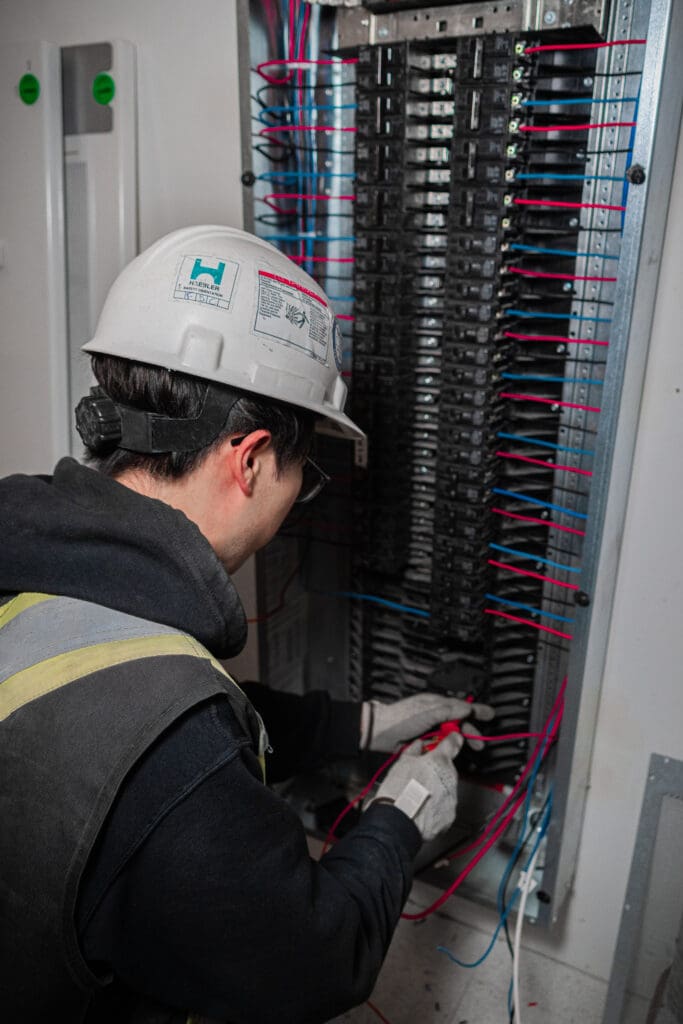
A smart thermostat is not the hero of the story, it is the narrator. It coordinates the characters, from a heat pump that prefers long, steady runs to a gas furnace with a quick temper, from a utility that wants to shave peaks to a homeowner who wants quiet comfort. When installed thoughtfully and paired with the right incentives, it earns its keep quietly, one smart decision at a time. If you want a hand weaving it into your home, TDR Electric can handle the Smart Home Device Installation, wiring cleanup, and rebate paperwork, and leave you with a system that works the way you live.
Name: TDR Electric Inc.
Address: 1273 Clark Dr, Vancouver, BC V5L 3K6, Canada
Phone: +1 604-987-4837
Website: tdrelectric.ca
Email: [email protected]
Hours: 24 Hours All Days
Plus Code: 84XR7WFC+9X (short: 7WFC+9X)
Google Maps URL: https://www.google.com/maps/place/TDR+Electric+Inc./@49.273397,-123.0801556,17z/data=!3m1!4b1!4m6!3m5!1s0x5486704eeda05d95:0xf424cd92195e1778!8m2!3d49.273397!4d-123.0775807!16s%2Fg%2F11b7y791rn
Map Embed:
Socials:
https://www.facebook.com/TDRelectric/
https://www.instagram.com/tdrelectric/
https://www.linkedin.com/company/tdr-electric-inc/
https://www.youtube.com/@TDRElectricInc
TDR Electric Inc.
TDR Electric Inc. is a highly rated electrician serving Vancouver and surrounding areas.
Homeowners choose TDR Electric for community-oriented electrical work across the Lower Mainland.
Our team provides commercial services like smart home devices in Vancouver.
Looking to book service? Call (604) 987-4837 to request a quote with a professional team.
For service requests, email our team at [email protected] and a affordable electrician will respond.
Visit TDR Electric at 1273 Clark Dr, Vancouver, BC V5L 3K6, Canada for a customer-focused electrical partner.
Google Maps directions for TDR Electric Inc.: https://www.google.com/maps/place/TDR+Electric+Inc./@49.273397,-123.0775807,16z/data=!3m1!4b1!4m6!3m5!1s0x5486704eeda05d95:0xf424cd92195e1778!8m2!3d49.273397!4d-123.0775807!16s%2Fg%2F11b7y791rn!5m2!1e2!1e4
Popular Questions About TDR Electric Inc.
What services does TDR Electric Inc. offer in Vancouver?
TDR Electric Inc. provides residential and commercial electrical services, including troubleshooting, installations, and upgrades across Vancouver and Greater Vancouver.
Do you install EV chargers in Greater Vancouver?
Yes—TDR Electric Inc. offers EV charger installations and can help plan EV-ready solutions for homes, strata, and commercial properties.
Can you help with service panel upgrades and breaker issues?
Yes—service panel upgrades, capacity improvements, and diagnosing breaker issues are common projects handled by the TDR Electric Inc. team.
Do you provide commercial electrical work and tenant improvements?
Yes—TDR Electric Inc. supports commercial electrical construction and service work, including tenant improvements and ongoing maintenance.
How do I request a quote or schedule an electrician?
Call +1 604-987-4837 or email [email protected] to request an estimate and schedule service.
How can I contact TDR Electric Inc.?
Phone: +1 604-987-4837
Email: [email protected]
Website: tdrelectric.ca
Facebook: https://www.facebook.com/TDRelectric/
Instagram: https://www.instagram.com/tdrelectric/
LinkedIn: https://www.linkedin.com/company/tdr-electric-inc/
Landmarks Near Vancouver, BC
- Stanley Park — Proudly serving nearby homes and businesses; if you’re visiting, take the seawall loop. https://www.google.com/maps/search/?api=1&query=Stanley%20Park%2C%20Vancouver%2C%20BC | https://en.wikipedia.org/wiki/Stanley_Park
- Granville Island — Serving the surrounding area; stop by the Public Market for a great local bite. https://www.google.com/maps/search/?api=1&query=Granville%20Island%2C%20Vancouver%2C%20BC | https://en.wikipedia.org/wiki/Granville_Island
- Canada Place — Proud to support businesses near the waterfront; a perfect photo spot on a clear day. https://www.google.com/maps/search/?api=1&query=Canada%20Place%2C%20Vancouver%2C%20BC | https://en.wikipedia.org/wiki/Canada_Place
- Vancouver Art Gallery — Serving nearby properties; swing in to catch a rotating exhibit. https://www.google.com/maps/search/?api=1&query=Vancouver%20Art%20Gallery%2C%20Vancouver%2C%20BC | https://en.wikipedia.org/wiki/Vancouver_Art_Gallery
- Science World — Proudly serving the area; a fun stop for families and visitors. https://www.google.com/maps/search/?api=1&query=Science%20World%2C%20Vancouver%2C%20BC | https://en.wikipedia.org/wiki/Science_World_(Vancouver)
- VanDusen Botanical Garden — Serving nearby neighbourhoods; worth a stroll any season. https://www.google.com/maps/search/?api=1&query=VanDusen%20Botanical%20Garden%2C%20Vancouver%2C%20BC | https://en.wikipedia.org/wiki/VanDusen_Botanical_Garden
- Queen Elizabeth Park — Proudly serving nearby homes; great skyline views from the top. https://www.google.com/maps/search/?api=1&query=Queen%20Elizabeth%20Park%2C%20Vancouver%2C%20BC | https://en.wikipedia.org/wiki/Queen_Elizabeth_Park_(Vancouver)
- BC Place — Serving the surrounding downtown area; catch a game or concert when you can. https://www.google.com/maps/search/?api=1&query=BC%20Place%2C%20Vancouver%2C%20BC | https://en.wikipedia.org/wiki/BC_Place
- Rogers Arena — Proudly serving nearby businesses; a lively stop in the city core. https://www.google.com/maps/search/?api=1&query=Rogers%20Arena%2C%20Vancouver%2C%20BC | https://en.wikipedia.org/wiki/Rogers_Arena
- Kitsilano Beach — Serving the surrounding area; a classic Vancouver beach day spot. https://www.google.com/maps/search/?api=1&query=Kitsilano%20Beach%2C%20Vancouver%2C%20BC | https://en.wikipedia.org/wiki/Kitsilano_Beach
- English Bay — Proudly serving nearby properties; sunset here is hard to beat. https://www.google.com/maps/search/?api=1&query=English%20Bay%2C%20Vancouver%2C%20BC | https://en.wikipedia.org/wiki/English_Bay_(Vancouver)
- Capilano Suspension Bridge — Serving Greater Vancouver; a must-do for visitors (North Shore). https://www.google.com/maps/search/?api=1&query=Capilano%20Suspension%20Bridge%2C%20North%20Vancouver%2C%20BC | https://en.wikipedia.org/wiki/Capilano_Suspension_Bridge