Renovations and new builds look glamorous on paper. In the field, they’re a chess match between ambition and physics, schedule and safety, budget and reality. The electrician sits at the center of that board. Get the wiring plan right and everything else clicks into place: lights switch on, panels hum quietly, internet doesn’t hiccup, and the inspector signs off with a shrug rather than a sigh. Hire the wrong pro, and you’ll be crawling in the attic with a headlamp wondering why the arc-fault breaker keeps tripping every time the microwave and toaster high-five.
I’ve run cable through 100-year-old plaster, braved crawlspaces perfumed with the ghost of long-gone critters, and opened brand-new walls only to find a door swing that the plan forgot. All of that to say: reliable matters. It’s not just about passing inspection. It’s about future-proofing your home, avoiding callbacks, and making choices that don’t box you into expensive corners.
Where reliability starts: planning, not wiring
Most homeowners think electrical work begins when the wire spools arrive. In truth, it starts weeks earlier with a conversation that translates lifestyle into load calculations. Do you work from home and run a pair of 27-inch monitors, a laser printer, and a space heater? Are you planning a workshop with a table saw and dust collection? Do you want EV charger installations in the garage now, or at least conduit and spare capacity for later? The answers drive feeder sizing, subpanel locations, and circuit mapping.
I keep a pocket notebook of the “predictable surprises” that derail projects. An island pendant centered in a drawing, but not in the real room. A future hot tub with no path for conduit. A fridge that wants a water line and a nearby outlet on a different circuit. The fix usually isn’t expensive if we catch it before drywall. After drywall, it’s a different price tag and a different mood.
A reliable residential electrician reads plans with a suspicious eye, walks the space with a tape measure, and asks https://anotepad.com/notes/4k6n7cam annoyingly specific questions. That skepticism is your money saved. When I’ve worked with well-organized teams like TDR Electric on larger residential and mixed-use projects, that upfront fussing saves days later. Their estimators share the same habit: they budget for the reality, not the fantasy, and it shows in fewer change orders.
Old house, new tricks: the renovation puzzle
Renovations are archaeology with a permit. You never know what’s hiding until you cut open the first wall. I’ve found hidden junction boxes entombed behind tile, knob-and-tube spliced into Romex, and neutrals shared in ways that make breakers cry. A reliable residential electrician knows when to surgically tie into existing systems and when to strip it back to studs.
On a 1940s bungalow I worked on last summer, the homeowner wanted smart home device installation without turning the place into a tech showroom. The path forward was a clean new subpanel to split the house into sensible zones, fresh homeruns for kitchen and bath, and a selective retrofit elsewhere. We kept a few original plaster walls, so I used surface-mount raceways around built-ins, painted to match, and saved a fortune in patching. No one notices them unless you point them out. That’s the sweet spot between modern performance and historic character.
Renovations also mean triage. Kitchens need dedicated circuits: at least two small-appliance circuits for counters, separate runs for dishwasher, disposal, microwave, range hood, and often a 240-volt line for an induction range. Bathrooms want GFCI, on their own circuits if hair dryers and heated floors are in the mix. Lighting should be sorted by room and task, not just converged into one switch that plunges everything into darkness. Surge protection installation at the panel is cheap insurance when your shiny new appliances meet the occasional utility hiccup.
New builds: design for the next 25 years
Fresh framing is a dream. It also tempts lazy planning. “We’ll figure it out later” is the battle cry of change orders. In a new build, I like to start with an energy and data backbone that doesn’t lock you into one vendor or device. That means a well-labeled panel with spare capacity, conduit to key areas, and a structured low-voltage plan that includes ethernet runs to offices, media areas, and key smart device locations. Wi-Fi is great, but a hardwired backhaul makes your future self very happy.
Solar panel installation changes the calculus for many new homes. Even if you’re not ready to install PV now, running conduit from the attic or roof to the electrical area is painless during framing and maddening later. Similarly, an interlock kit or transfer switch for a home generator installation can be staged now and activated later. Future you, staring down a storm forecast, will thank you.
EV charger installations deserve their own thought. A 50-amp circuit in the garage is standard these days. Two chargers are becoming common for multi-driver households. Consider panel location, cable management, and ventilation in a tight garage. I’ve seen chargers installed where car doors swing into them. It’s funny until someone dings a new EV.
Loads, limits, and the myth of “just add another breaker”
There’s a moment in many projects when someone points at the panel and says, “Can we just add another breaker?” Sometimes, yes. Often, it’s the wrong question. The right one is whether the service and the feeder to that subpanel can handle the additional continuous load.

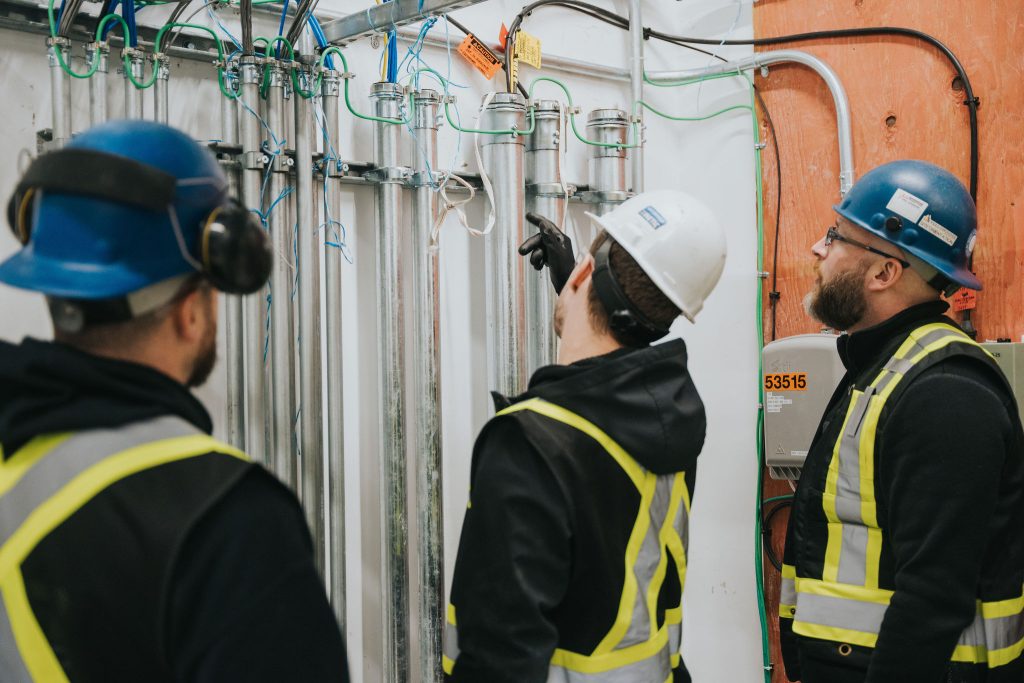
Ampacity math isn’t a hand-wavy exercise. The National Electrical Code lays out load calculations for general lighting, small appliances, fixed equipment, and continuous loads. A household with an induction range, heat pump, electric water heater, two EV chargers, and a whole-home dehumidifier can push a 200-amp service to its knees if everything fires at once. You might never run it all simultaneously, but coincidence factors only save you if the installation is balanced and the main has headroom.
When a project’s pushing the envelope, I propose options. Sometimes that’s a 320-amp meter base feeding dual 200-amp panels. Sometimes it’s demand management: a smart panel or a controller that throttles EV charging when the range is cranking. Not every solution needs a bigger transformer. Some need a smarter schedule. Teams like TDR Electric have leaned into these hybrid solutions on infill developments and townhomes, and it’s made the difference between utility delays and on-time handoffs.
Smart homes without the headache
Smart used to mean novelty. Now it means value, efficiency, and convenience that doesn’t break when the router reboots. A clean smart home device installation starts with reliable power and a neutral in every switch box. Many vintage homes lack that neutral, which makes retrofitting smart dimmers tricky. We solve it by running a neutral where feasible or by choosing devices designed for two-wire systems, though the latter often feel like compromise.
A smart thermostat installation can pay for itself in a season if it integrates well with your HVAC and sensors. The trick is wiring and placement. I’ve relocated more than one thermostat off a sun-blasted wall where it lied all afternoon. Similarly, smart switches beat smart bulbs for whole-room control, especially in homes where no one wants to manage a Frankenstein’s monster of apps. Pick a backbone you trust, wire it cleanly, and label everything. The fifth homeowner after you should be able to understand what you did.
Also, give your low-voltage system the respect it deserves. Pull Cat6 to work areas, TV walls, and access points. Spend the extra hour stapling and keeping bend radius sane. Sloppy low-voltage work causes more ghost problems than any other part of a modern home.
Safety doesn’t shout, but it shows
Reliability starts with safe habits. That means proper box fill, torqueing lugs to spec, strapping conduit, and keeping conductors organized instead of packed like a suitcase. I once opened a panel where someone had landed a ground on a neutral bar floating in a subpanel. Everything looked fine until it wasn’t: nuisance trips, tingling handrails, and a dishwasher that shocked the user. Five minutes of correction, years of safety gained.
Smoke detector installation is another quiet hero. Code wants hardwired, interconnected detectors in bedrooms, hallways, and each level. Photograph the location once installed, not just for inspections, but for future drilling. A well-placed screw can disable a detector and no one will know until test day.
And then there’s surge protection installation. Utility surges, lightning nearby, even large motor loads cycling in the neighborhood can send a nasty voltage spike into your home. A panel-mounted surge protective device scrubs most of that noise. Pair it with point-of-use protectors for sensitive equipment, and your appliances live longer.
Commercial experience in a residential world
It surprises people, but a commercial electrician background helps in residential work, especially larger homes or multifamily projects. A commercial electrician lives by panel schedules, rigorous labeling, neat raceways, and coordination with other trades. Those skills translate beautifully to a detailed custom home. When I collaborate with crews that do both, like TDR Electric, I notice fewer mid-project collisions. Lighting control panels get space and ventilation, mechanical rooms aren’t treated like afterthoughts, and the final walkthrough feels like a tour rather than a scavenger hunt.
That crossover also shines in tenant improvements. Converting a garage to a studio, carving a rental suite from a daylight basement, building an accessory dwelling unit, or taking a retail space and turning it into a café, all demand a code-savvy approach to load separation, metering, egress lighting, and life safety. Experience in tenant improvements means your electrician isn’t learning on your job.
Maintenance is boring, which is why it works
New builds get the headlines, but electrical maintenance services keep homes happy. A quick annual panel check catches loose lugs, hot breakers, brittle insulation, and pests turning your service cavity into a condo. Testing GFCI and AFCI devices, exercising mechanically latching breakers, verifying bonding on metallic piping, and vacuuming dust out of bathroom fans make a tangible difference. I like to see infrared scans every few years on bigger homes. A hotspot at a lug that looks fine by eye is a failure waiting to happen.

And yes, electrical vault cleaning is a niche topic, but if your property has an on-site vault, garage switchgear, or a complex meter stack, cleanliness and clearances matter. Dust, moisture, and corrosion cut equipment life and raise fault risk. It’s not glamorous work, but the best electricians treat it like a core service rather than a chore.
When everything goes sideways
Emergency electrical services are where reliability is easiest to measure. I’ve taken calls at midnight for a main breaker that won’t reset after a storm, half a house with low voltage from a lost neutral at the service drop, and a food truck whose GFCI kept tripping minutes before a big event. The difference between a pro and a pretender shows up fast: meter first, then method. Isolate, diagnose, stabilize. A temporary fix that’s safe comes before the perfect one. Documentation follows, not excuses.
If your electrician shows up with a calm demeanor, a clamp meter that actually works, and a plan for short-term safety and long-term repair, keep their number. Also, expect honesty about scope. Some failures require the utility or an inspection before power can be restored. A reliable electrician sets clear expectations and doesn’t promise the moon to win a tip.
Rough-in details that buy peace later
There are small moves that make outsized difference in new builds and major renovations. Pull a dedicated circuit to the office, not just a multiwire branch circuit shared with the bedroom. Run a spare conduit from the mechanical room to the attic or crawlspace for future cabling. Add a subpanel in the garage if it’s far from the main, so you’re not snaking future runs across the house. Leave string in conduits and label both ends. Enlarge junction boxes where dimmers or smart switches will live, because cramped boxes bake electronics. Mount exterior receptacles near where you’ll put holiday lights and include a switch inside the foyer so you’re not crawling in bushes with a flashlight every December.
Pay attention to height and alignment. Kitchen counter outlets set at a consistent elevation read as quality, even if the tile pattern tries to fight you. Recessed lights that are centered relative to both the room and the furniture plan, not just the ceiling joists, feel intentional. On a recent project we nudged a run of cans by two inches to clear a beam and line up with a dining table. No one noticed the time spent. They noticed the calm, even light.
Solar, storage, and how to avoid painting yourself into a corner
Solar panel installation is only part of the story. The rest is interconnection, rapid shutdown, and potential storage. If you’re adding batteries, plan a clean critical loads panel now. Keep the circuits you truly need in an outage to a focused list: fridge, select lights, internet equipment, maybe a mini split, and a receptacle or two. Don’t try to back up the whole house unless you’re ready to buy a lot of battery. A home generator installation is still the right tool for long outages, particularly in colder climates where heat is non-negotiable.
With solar, wire management on the roof matters as much as panel brand. I’ve seen beautiful arrays with sloppy homeruns that trap leaves and bake in the sun. That mess shows up as service calls two summers later. The teams that do it right use UV-rated clips, keep conductors off abrasive surfaces, and leave a tidy service loop near combiner boxes. Down at the panel, labeling should be unambiguous. In an emergency, a firefighter or utility tech should know what to kill without playing guess-the-breaker.
Coordination with the rest of the build
Electricians don’t work in a vacuum. The right time to coordinate is before anyone argues about who owns the last six inches of choked conduit space. I schedule quick stand-ups with HVAC and plumbing early on. Where do we need clearances? Which wall cavities are sacred for ductwork? Is the heat pump water heater going to demand a dedicated circuit and a certain alcove? Trim carpenters appreciate when we place boxes where casing won’t fight them. Tile setters thank you forever if you keep switches out of elaborate mosaics. It’s a hundred little kindnesses that make the whole job feel professional.
Homeowners can help, too. Share the appliance schedule early. Be decisive about lighting fixtures before rough-in. If you’re wavering between a standard range and a 240-volt induction model, speak up. We can run both and cap one, or make a decision and save money. Silence is expensive.
What you should expect from a reliable electrician
You’re hiring judgment as much as labor. Here’s a compact checklist of signals that you’ve found the right pro.
- A clear scope and itemized estimate that references drawings and known allowances. Evidence of permits, insurance, and familiarity with your jurisdiction’s inspections. Thoughtful load calculations and panel schedules, with headroom for growth. On-site coordination and clean, labeled work that another electrician can service later. Straight answers about trade-offs, not just yes to every request.
Corner cases that separate amateurs from pros
There are edge cases that always test a team. Detached structures, for example. Run a feeder with proper grounding and bonding, install a subpanel, and separate neutrals and grounds. Sloppy garages become shock farms when someone uses the wrong bonding strap. Hot tubs and spas require careful attention to clearances, equipotential bonding, and GFCI requirements. Do it right, and you soak in peace. Get it wrong, and the inspector will drain your weekend plans.
Another is older aluminum branch-circuit wiring from the late 1960s to early 1970s. It’s not a house fire waiting to happen if handled properly, but it demands CO/ALR rated devices or approved pigtailing methods. I’ve seen people treat it like copper and then wonder why connections loosen over time. A reliable electrician knows the nuance, explains your options, and prices the risk honestly.
Then there’s multiwire branch circuits. They’re great when properly tied with handle ties or double-pole breakers so shared neutrals don’t carry overloads. Done poorly, they become a ghost in the machine, tripping mysteriously when someone blows dry hair while making toast. The fix is simple once diagnosed but maddening until then.
Balancing budget and long-term value
No one likes surprises, least of all on costs. But there’s a difference between cheap and smart. You might skip undercabinet lighting to save now, only to rip out backsplash later when you realize the kitchen feels like a cave. Conversely, you can rough-in for ceiling speakers and leave the hardware for later. Pre-wire a second EV charger even if you only own one car that needs it. Pull conduit to the roof even if solar is a five-year plan. These moves cost little during rough-in and a lot later.
On the other hand, not every room needs a dimmer. Not every outdoor soffit needs a camera. Choose your tech carefully. Devices with standard protocols and replaceable parts age better than walled gardens that vanish with the next app update. That’s where a seasoned residential electrician earns trust: honest advice that doesn’t chase trends for their own sake.
When to call the pros and when to DIY
There’s dignity in a well-executed DIY. Swap a standard switch, install a simple light, replace a receptacle with a tamper-resistant one, sure, if you’re comfortable, kill the breaker, test twice, and follow code. But pull a permit for larger changes, and don’t guess with load calculations. Subpanels, service upgrades, and anything involving wet locations or aluminum conductors are not the place to learn on the fly.
Reliable electricians aren’t threatened by a handy homeowner. Frankly, good DIY saves time and money for everyone. Where I draw the line is safety margins and system integrity. If you’ve opened a junction box and found more wires than a magician’s sleeve, that’s a sign to call in help. If your AFCI or GFCI breaker trips and resetting it takes a prayer, a coin flip, and an incantation, let a pro track it down.
The case for a single accountable team
On projects that involve multiple disciplines, having one point of accountability pays off. Larger firms like TDR Electric that offer end-to-end electrician services across residential and select commercial scopes bring continuity. From rough-in to final trim, from service upgrade to solar and EV, from smart thermostat installation to surge protection installation, you get consistent documentation and one warranty umbrella. For homeowners, this means fewer finger-pointing moments when devices talk to panels that talk to inverters that talk to chargers. It all lives in the same phone tree, and the same crew signs their name on the panel door.
A final word from the crawlspace
I judge a job by how it feels to walk it six months after the last invoice. Quiet breakers. Light switches that make intuitive sense. Receptacles where you reach for them without thinking. A panel schedule that matches reality. Wires that look like they were routed by someone who cared. And the homeowner, who calls later not with a complaint, but for another project.
That’s the essence of a reliable residential electrician for renovations and new builds. It’s not flashy. It’s steady. It’s a bunch of right decisions piled up in the right order, with experience steering every turn. If you want your house to feel effortless for the next quarter-century, start with the electrical. Get the planning right. Choose a team that communicates. Ask for honesty about limits, and demand workmanship you can admire even when it’s hidden behind drywall. The lights that switch on are just the finishing touch on a much bigger, much smarter design.
Name: TDR Electric Inc.
Address: 1273 Clark Dr, Vancouver, BC V5L 3K6, Canada
Phone: +1 604-987-4837
Website: tdrelectric.ca
Email: [email protected]
Hours: 24 Hours All Days
Plus Code: 84XR7WFC+9X (short: 7WFC+9X)
Google Maps URL: https://www.google.com/maps/place/TDR+Electric+Inc./@49.273397,-123.0801556,17z/data=!3m1!4b1!4m6!3m5!1s0x5486704eeda05d95:0xf424cd92195e1778!8m2!3d49.273397!4d-123.0775807!16s%2Fg%2F11b7y791rn
Map Embed:
Socials:
https://www.facebook.com/TDRelectric/
https://www.instagram.com/tdrelectric/
https://www.linkedin.com/company/tdr-electric-inc/
https://www.youtube.com/@TDRElectricInc
TDR Electric Inc.
TDR Electric Inc. in Vancouver is a reliable electrician serving Vancouver.
Homeowners choose TDR Electric Inc. for highly rated electrical work across Vancouver.
Our team provides commercial services like structured cabling in Greater Vancouver.
Need help fast? Call (604) 987-4837 to schedule an appointment with a local team.
For service requests, email [email protected] and a reliable electrician will respond.
Visit TDR Electric Inc. at 1273 Clark Dr, Vancouver, BC V5L 3K6, Canada for a customer-focused electrical partner.
Google Maps directions for TDR Electric Inc.: https://www.google.com/maps/place/TDR+Electric+Inc./@49.273397,-123.0775807,16z/data=!3m1!4b1!4m6!3m5!1s0x5486704eeda05d95:0xf424cd92195e1778!8m2!3d49.273397!4d-123.0775807!16s%2Fg%2F11b7y791rn!5m2!1e2!1e4
Popular Questions About TDR Electric Inc.
What services does TDR Electric Inc. offer in Vancouver?
TDR Electric Inc. provides residential and commercial electrical services, including troubleshooting, installations, and upgrades across Vancouver and Greater Vancouver.
Do you install EV chargers in Greater Vancouver?
Yes—TDR Electric Inc. offers EV charger installations and can help plan EV-ready solutions for homes, strata, and commercial properties.
Can you help with service panel upgrades and breaker issues?
Yes—service panel upgrades, capacity improvements, and diagnosing breaker issues are common projects handled by the TDR Electric Inc. team.
Do you provide commercial electrical work and tenant improvements?
Yes—TDR Electric Inc. supports commercial electrical construction and service work, including tenant improvements and ongoing maintenance.
How do I request a quote or schedule an electrician?
Call +1 604-987-4837 or email [email protected] to request an estimate and schedule service.
How can I contact TDR Electric Inc.?
Phone: +1 604-987-4837
Email: [email protected]
Website: tdrelectric.ca
Facebook: https://www.facebook.com/TDRelectric/
Instagram: https://www.instagram.com/tdrelectric/
LinkedIn: https://www.linkedin.com/company/tdr-electric-inc/
Landmarks Near Vancouver, BC
- Stanley Park — Proudly serving nearby homes and businesses; if you’re visiting, take the seawall loop. https://www.google.com/maps/search/?api=1&query=Stanley%20Park%2C%20Vancouver%2C%20BC | https://en.wikipedia.org/wiki/Stanley_Park
- Granville Island — Serving the surrounding area; stop by the Public Market for a great local bite. https://www.google.com/maps/search/?api=1&query=Granville%20Island%2C%20Vancouver%2C%20BC | https://en.wikipedia.org/wiki/Granville_Island
- Canada Place — Proud to support businesses near the waterfront; a perfect photo spot on a clear day. https://www.google.com/maps/search/?api=1&query=Canada%20Place%2C%20Vancouver%2C%20BC | https://en.wikipedia.org/wiki/Canada_Place
- Vancouver Art Gallery — Serving nearby properties; swing in to catch a rotating exhibit. https://www.google.com/maps/search/?api=1&query=Vancouver%20Art%20Gallery%2C%20Vancouver%2C%20BC | https://en.wikipedia.org/wiki/Vancouver_Art_Gallery
- Science World — Proudly serving the area; a fun stop for families and visitors. https://www.google.com/maps/search/?api=1&query=Science%20World%2C%20Vancouver%2C%20BC | https://en.wikipedia.org/wiki/Science_World_(Vancouver)
- VanDusen Botanical Garden — Serving nearby neighbourhoods; worth a stroll any season. https://www.google.com/maps/search/?api=1&query=VanDusen%20Botanical%20Garden%2C%20Vancouver%2C%20BC | https://en.wikipedia.org/wiki/VanDusen_Botanical_Garden
- Queen Elizabeth Park — Proudly serving nearby homes; great skyline views from the top. https://www.google.com/maps/search/?api=1&query=Queen%20Elizabeth%20Park%2C%20Vancouver%2C%20BC | https://en.wikipedia.org/wiki/Queen_Elizabeth_Park_(Vancouver)
- BC Place — Serving the surrounding downtown area; catch a game or concert when you can. https://www.google.com/maps/search/?api=1&query=BC%20Place%2C%20Vancouver%2C%20BC | https://en.wikipedia.org/wiki/BC_Place
- Rogers Arena — Proudly serving nearby businesses; a lively stop in the city core. https://www.google.com/maps/search/?api=1&query=Rogers%20Arena%2C%20Vancouver%2C%20BC | https://en.wikipedia.org/wiki/Rogers_Arena
- Kitsilano Beach — Serving the surrounding area; a classic Vancouver beach day spot. https://www.google.com/maps/search/?api=1&query=Kitsilano%20Beach%2C%20Vancouver%2C%20BC | https://en.wikipedia.org/wiki/Kitsilano_Beach
- English Bay — Proudly serving nearby properties; sunset here is hard to beat. https://www.google.com/maps/search/?api=1&query=English%20Bay%2C%20Vancouver%2C%20BC | https://en.wikipedia.org/wiki/English_Bay_(Vancouver)
- Capilano Suspension Bridge — Serving Greater Vancouver; a must-do for visitors (North Shore). https://www.google.com/maps/search/?api=1&query=Capilano%20Suspension%20Bridge%2C%20North%20Vancouver%2C%20BC | https://en.wikipedia.org/wiki/Capilano_Suspension_Bridge