You buy an electric vehicle, the odometer barely crests triple digits, and suddenly you’re timing your life around public chargers. Coffee shop charging works for a week. After that, the math gets wonky. The real transformation happens when your car refuels at home while you sleep. The difference is not subtle. Done right, a home EV charger turns range anxiety into a boring footnote and daylight hours into drive time. Done wrong, it becomes a breaker-tripping, cable-melting, warranty-voiding headache.
I’ve installed chargers in garages that look like art studios and basements that should come with a tetanus shot. The fundamentals don’t change. Electricity is bluntly honest. It rewards clean design and punishes shortcuts. Below is a deep dive into what counts as clean design for EV charging and how pros think about the wiring, gear, and small decisions that separate a reliable setup from a science fair project.
Level 1, Level 2, and what your car actually needs
Most EVs ship with a Level 1 cord, a compact unit that sips power from a standard 120-volt outlet. It adds roughly 3 to 5 miles of range per hour, which fits short commutes and patient personalities. For anyone who drives more than 25 to 40 miles a day, Level 2 is the move. Level 2 runs on 240 volts and delivers far more current, typically 16 to 48 amps continuous. On paper, that translates to 15 to 45 miles of range per hour depending on the vehicle and the charger.
Manufacturers rate wall-mounted Level 2 chargers by amperage. A 40-amp charger on a 50-amp circuit is a popular sweet spot for detached homes. In apartments and older houses, 32-amp chargers on 40-amp circuits often make the electrical math easier. The car also matters. Some vehicles can only accept 32 amps on AC. Others will happily drink 48 amps, which nudges you into heavier wiring, a 60-amp breaker, and a closer look at service capacity.
If you have a plug-in hybrid, you can be smugly flexible. Many PHEVs charge fully on Level 1 overnight. If you want faster turnarounds or you loathe extension cords draped across the garage, Level 2 still feels nice, but not strictly necessary.
The service panel: your project’s air traffic control
Before running a single foot of cable, pros look at the service panel like a detective. The faceplate amperage matters, but so does the layout, spare breaker positions, and how the existing circuits behave under load. A 100-amp panel in a small home can sometimes accommodate a 40-amp EV circuit without drama. A 200-amp panel in a large house can run out of headroom if the kitchen, HVAC, and hot tub are already busy.
The gold standard is a load calculation per the National Electrical Code. It is not guesswork. You tally square footage, fixed appliances, and known loads, then account for diversity factors. The result tells you whether you can add a 50- or 60-amp two-pole breaker for the EV charger or if you need a service upgrade. When a calculation lands on the fence, smart load management can save the day. Some chargers throttle automatically when the home’s total demand spikes. Others integrate with a current transformer at the service entrance, shedding EV load when you run the oven and the dryer at once. Not all inspectors accept dynamic load management as a substitute for capacity, so local rules win.
I’ve seen homeowners try to piggyback a charger onto an old dryer circuit. It sometimes works for a week, then fails in spectacularly boring ways. You end up tripping breakers, cooking receptacles, or welding plug blades to tired outlets. A dedicated circuit with the correct breaker, wire, and termination is the only safe path.
Wiring that behaves
Copper is still king for branch circuits feeding EV chargers. Aluminum has its place in service feeders, but for runs inside a garage or the wall cavity, copper resists heat and handles termination better. Gauge depends on the continuous load and the run length. As a rule of thumb, a 40-amp continuous EV load requires a 50-amp breaker and 6 AWG copper conductors when run as THHN in conduit. If the distance from the panel to the charger location stretches longer than about 80 to 100 feet, you check voltage drop. A high-current charger pulling for hours will highlight sloppy conductor sizing.
Conduit versus cable comes down to the space and code. In unfinished garages, EMT or PVC conduit is common, neat, and durable. In finished walls, NM-B cable may be allowed, but you still protect the run along studs and through plates. Where vehicles or lawn equipment might hit the wiring, physical protection is not optional. I’ve replaced more than one cable that met its end courtesy of a snow shovel.
GFCI protection for EV supply equipment is mandated in many jurisdictions now. Some chargers include internal GFCI. If your model does, skip the GFCI breaker and use a standard two-pole of the correct rating, otherwise you invite nuisance trips. If the charger does not include it, you’ll need a GFCI breaker at the panel. Mismatched layers of protection make for mysterious failures that are hard to troubleshoot.
Outdoor installs add details. Use a charger rated for the elements, mount it on a sturdy backboard or rated pedestal, and use wet-location fittings with proper drip loops. Seal penetrations, but let enclosures breathe the way the manufacturer intended. Trapped condensation can be more damaging than rain.
Mounting and cable management that you won’t curse
Think about traffic patterns. If you park nose-in and charge on the driver’s side, mount the unit where the cable arcs naturally without dragging across the hood. Shoulder height works for most people, high enough for tidy wraps and low enough to read the display without a ladder. If you back in, do a rehearsal with the car before drilling holes. I’ve watched folks mount a unit beautifully for the wrong parking habit, then wear out the cable lugging it around bumpers like a garden hose.
Cables stiffen in cold weather, so allow extra slack if winters bite. In tight garages, a recessed channel or a simple wall cleat keeps the cable tidy. Avoid sharp bends at the charger head. Those stress points fail first, and replacements are rarely cheap.
For detached garages or carports, a pedestal mount isolates the charger from fragile siding and keeps cable reach consistent. If you plan to charge two cars, pick a dual-port unit or two units with load sharing. Sharing lets both vehicles replenish without upgrading the panel. Some dual setups gracefully alternate full power between vehicles to stay within a fixed limit.
Smart features that earn their keep
The term smart gets abused, but a few features genuinely help. Scheduled charging matches low utility rates and shaves demand peaks. If your utility offers time-of-use billing or demand response credits, a smart charger can make a measurable dent in costs. For a commuter EV, you often set a start time after midnight and forget it. For rooftop solar owners, daytime charging during surplus production makes sense. Many chargers integrate with solar monitoring so the car sips excess PV output first.
Load sharing among multiple EVSE units matters for two-EV households. The chargers coordinate to stay under a circuit or service limit. They talk via Wi-Fi, Bluetooth, or sometimes a wired data link. When Wi-Fi feels flaky, I prefer models that don’t lock critical functions behind cloud servers. If the internet drops, you still want the car to charge on schedule.
Open standards like OCPP give more options for commercial settings and fleet management. For homes, app reliability and firmware stability matter more than alphabet soup. Before buying, skim support forums and app store reviews. The best hardware can be sunk by sloppy software.
Permits, inspections, and the inspector you want on your side
Pulling a permit is not paperwork for paperwork’s sake. It protects your insurance, your resale, and your safety. Most jurisdictions have straightforward processes for EVSE circuits. The plan set typically includes a simple one-line diagram, breaker size, conductor sizing, routing, and the charger spec sheet. An inspection is brief if the work is clean.
On site, the inspector wants to see correct breaker labeling, proper conductor size and insulation type, secure mechanical connections, a bonding path, and appropriate GFCI protection. They also check working clearances at the panel and charger. If you are tempted to tuck the charger behind a freezer, resist that urge.
Companies like TDR Electric that handle EV Charger Installations daily move quickly through permitting because they know the local preferences. Some regions love external disconnects next to outdoor units. Others are particular about conduit types or seismic bracing. A Residential Electrician who works your area regularly saves you two trips to the hardware store and one awkward reschedule.
Where EV charging meets the rest of the house
A charger does not live in a vacuum. If you already planned a Home Generator Installation, we map priorities between backup loads and EV charging. You probably do not want the generator laboring to feed a 40-amp car while also running the fridge and furnace. Load-shedding modules prevent that scenario. In homes with Solar Panel Installation, the EV becomes your largest daytime load, a perfect sink for overproduction. Some inverters and chargers talk to each other directly to optimize charging https://zanefqdf774.image-perth.org/smart-thermostat-installation-smart-energy-management-1 when PV output is strong.
Power quality matters as more electronics pile in. Surge Protection Installation at the service panel protects the charger’s sensitive electronics and the car’s onboard charger. Smart Thermostat Installation and other Smart Home Device Installation can share a network with your EVSE, which is fine if the Wi-Fi is solid and the SSID is not shared with your neighbor’s router from 2009. If a client wants app control but hates troubleshooting, a hardwired Ethernet run or a reliable mesh network is worth the trouble.
If the home’s electrical has not seen a pro in a decade, a quick round of Electrical Maintenance Services fits neatly with the charger project. Tighten lugs, replace tired breakers, test GFCI and AFCI protection, and verify grounding and bonding. While we are there, it is smart to test and refresh Smoke Detector Installation and check for missing covers or broken devices. Nothing makes a panel look as dignified as tidy wire management and legible labels.
Outdoor runs, garages with character, and other renovation realities
A classic mid-century garage often lacks a robust subpanel. You can trench a feeder from the main service to a new garage subpanel, then set the EV circuit there. This helps if you also want new lighting, a shop circuit, or future-proofing for another charger. Trenching depth, conduit type, marking tape, and backfill rules vary by climate. Frozen ground adds the kind of poetry you feel in your lower back a week later.
If walls are finished and you want a clean look, plan for a tiny bit of controlled surgery. A few well-placed cutouts, careful fishing, and patching beats an exposed conduit snaking across painted drywall in a living space. When open framing is available, I prefer rigid support for the charger backboard so lag bolts bite into framing, not gypsum.
For multi-unit buildings and Tenant Improvements, the puzzle grows. You may need a common EV infrastructure with managed load centers, individual meters, or billing through OCPP-compatible hardware. In that environment, a Commercial Electrician who understands demand charges and building management wins you friends in property management. Electrical Vault Cleaning and busway inspections can be part of these larger projects. The goal is the same: safe capacity, clean distribution, and a system tenants can actually use.
Safety details that separate neat from sketchy
The word continuous has teeth in EV charging. A charger pulling 40 amps for hours generates heat at every termination. Lugs must be torqued to manufacturer spec. That is not a suggestion. A proper torque screwdriver or wrench prevents loose connections that cook under load. Dielectric grease does not fix loose terminations and should only be used where the equipment manual calls for it.
Back-to-back GFCI devices breed nuisance trips. Choose one layer, align with instructions, and stick to it. Weatherproof covers on outdoor receptacles must be in-use rated. If you are feeding a plug-in EVSE on a NEMA 14-50, use a true industrial-grade receptacle, not a bargain-bin device meant for a stove that gets used twice a week. Heat brownouts receptacles and degrades spring tension. When a plug feels sloppy after a few months, that is not normal.
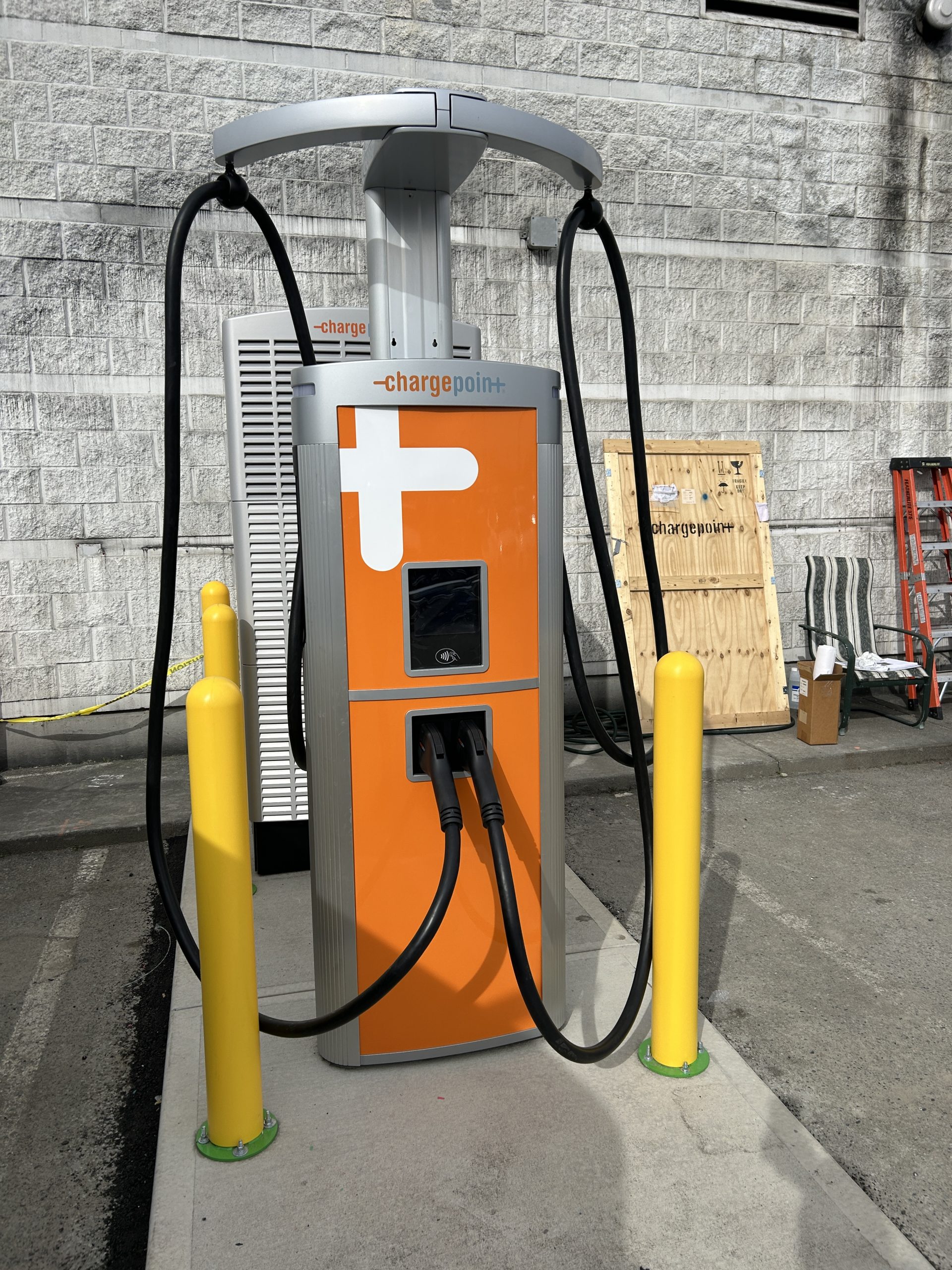
Cable routing deserves respect. Keep power and data separate where possible to avoid interference. Keep wiring away from sources of mechanical damage. Add bollards or guards if vehicles or equipment might collide with the charger. When I mount units in crowded garages, I imagine a teenager in a hurry with handlebars swinging wide. If the charger survives that, it will survive most things.
Budget ranges and where the money goes
Sticker shock usually hides in the labor and the wire. The charger hardware can range from a few hundred dollars for a basic 32-amp unit to north of a thousand for a high-amp smart model. Installation costs vary more than homeowners expect. If the panel sits a few feet from the charger location with spare breaker spaces and easy conduit runs, labor might be modest. If we are trenching to a detached garage, upgrading a panel, or fishing through finished walls, the labor and materials grow.
Ballpark numbers help set expectations. Simple installs near the panel can land in the low four figures including materials. Moderate installs with new conduit runs and a longer wire path fall in the mid four figures. Add a service upgrade or a garage subpanel and you might double that. These are ranges, not quotes. A site visit from a Residential Electrician will narrow it quickly.
Companies like TDR Electric that also handle Emergency Electrical Services come in handy when a charger install reveals hidden problems, like a scorched bus stab or a main lug that wiggles ominously. You do not want to discover those issues at 10 p.m. when your car is sitting at 8 percent.
Permissible DIY and where to call a pro
Handy homeowners can handle certain prep tasks without crossing into risky territory. Clearing the wall, planning the mounting point, and ensuring a reasonable cable path helps. If local rules allow, you might mount the backboard and patch drywall after the run. The electrical part, from breaker install to conductor sizing and terminations, is where a licensed electrician earns their fee. Mistakes are expensive in slow motion. It all works until it doesn’t, and then you are replacing more than a charger.
For anyone coordinating a larger remodel, rolling the EV circuit into the broader scope makes sense. While walls are open, add a spare conduit for the future. If we are already there doing Surge Protection Installation or Home Generator Installation work, the marginal cost to prep for a second charger later is small compared with doing it blind next year.
Cold climates, heat waves, and other environmental realities
Batteries limit charge rate in the cold, so your charger might look lazy in winter mornings. That is not the hardware failing. Preconditioning the battery while plugged in helps. Keep the cable off the floor where snowmelt puddles collect. Mount the unit where snow blowers will not eat it.
Heat brings its own issues. Chargers derate in high ambient temperatures to protect electronics. If your garage bakes in August, ventilation helps, and you might pick a unit with a higher thermal tolerance. A black charger on a south-facing wall becomes a skillet at noon. Shade and light-colored backboards reduce heat soak.
Salt air and coastal climates are tough on enclosures and terminals. Use stainless hardware when possible. Revisit the terminations after the first summer to retorque if the manufacturer allows it. Little maintenance goes a long way in harsh environments.
When two EVs move in
Two EVs create a rhythm. One car charges overnight on weekdays, the other tops up on weekends. If both need weekday mornings full, load sharing is your friend. Many systems allow second, third, or fourth units to coordinate on the same circuit or across phases when fed by a larger feeder. Wireless coordination works, but wired data links are more robust in garages with poor Wi-Fi.
Plan cable reach for both parking positions. If you routinely shuffle cars, a central pedestal with dual ports reduces cable acrobatics. Consider one high-amp unit and one lower-amp unit if the daily demands differ. The goal is steady, predictable charge windows, not a constant plug-and-swap dance.
Maintenance, updates, and the quiet chores that keep things perfect
Once installed, the charger should largely disappear from your mental load. Still, a few small habits pay off. Glance at the breaker after a few heavy charge cycles and feel for unusual warmth around terminations, keeping safety in mind. Dust off ventilation grills. Update firmware when the app prompts, but not on the exact night you are counting on a full charge for a road trip. If you ever smell a faint hot-plastic scent near the receptacle for a plug-in unit, stop and call a pro. Early intervention saves hardware.
As part of broader Electrical Maintenance Services, your electrician can check torque, inspect cable jackets, and test GFCI functions annually. If a storm rolls through and knocks power around, surge protection reduces risk, but a quick system check afterward is wise. If you have a home energy monitor, glance at historical draw to confirm the charger’s behavior remains steady over time.
A brief word on brands, warranties, and future proofing
There are several reputable charger makers that stand behind their hardware with multi-year warranties. I look for UL or ETL listings, a strong enclosure rating, replaceable cable assemblies, and clear support channels. The fanciest app in the world will not help if replacement parts take months. For homes that might swap vehicles in the next few years, err toward a charger that can deliver at least 40 amps. It covers most onboard chargers today and tomorrow without pushing your panel too hard.
If you expect to add energy storage or upgrade your Solar Panel Installation, pick gear that can join that ecosystem. Some manufacturers now package EV chargers, inverters, and smart panels that talk to each other. Interoperability keeps options open and reduces the pile of single-purpose apps on your phone.
When to pick up the phone
If your panel is near capacity, if your garage is detached, if the run looks long, or if you are juggling multiple big loads like HVAC and a range, call a pro. A company like TDR Electric that handles full-spectrum Electrician Services can look at the house as a system, not a one-off circuit. That includes quick-turn Emergency Electrical Services if a surprise crops up during the install, and the clean-up work you only notice six months later when everything still works quietly.
For commercial settings, a Commercial Electrician will weigh demand charges, shared infrastructure, and billing. If the property includes common areas, parking structures, or electrical rooms that need attention, adding Electrical Vault Cleaning and preventive maintenance into the scope is not busywork. It is insurance.
The payoff
A good home EV setup is unexciting in the best way. You plug in. The car charges. Your panel hums along without drama. Your utility bill behaves. You stop thinking about charge stops on every errand, and you stop wishing for that one open public station that always seems to be blocked by a pickup with a kayak.
Done with care, an EV charger becomes part of the home’s backbone, like a reliable furnace or well-laid plumbing. That care shows up in the load calculation, the wire sizing, the quiet torque of a lug brought to spec, the drip loop that shunts rain away, the neat conduit run that avoids a future dent. It is the difference between a gadget on the wall and a system you trust.
If you want that kind of install, find a Residential Electrician who treats the whole house with respect. Whether it is TDR Electric or another reputable shop, pick someone who is as comfortable with Smart Home Device Installation as they are with traditional wiring, who can add Surge Protection Installation without drama, and who does not blink at folding EV charging into other improvements, from Tenant Improvements to panel upgrades to Smoke Detector Installation. The right expert makes the engineering look easy. The result feels like your car grew a gas station at home, minus the fumes and the small talk.
Name: TDR Electric Inc.
Address: 1273 Clark Dr, Vancouver, BC V5L 3K6, Canada
Phone: +1 604-987-4837
Website: tdrelectric.ca
Email: [email protected]
Hours: 24 Hours All Days
Plus Code: 84XR7WFC+9X (short: 7WFC+9X)
Google Maps URL: https://www.google.com/maps/place/TDR+Electric+Inc./@49.273397,-123.0801556,17z/data=!3m1!4b1!4m6!3m5!1s0x5486704eeda05d95:0xf424cd92195e1778!8m2!3d49.273397!4d-123.0775807!16s%2Fg%2F11b7y791rn
Map Embed:
Socials:
https://www.facebook.com/TDRelectric/
https://www.instagram.com/tdrelectric/
https://www.linkedin.com/company/tdr-electric-inc/
https://www.youtube.com/@TDRElectricInc
TDR Electric Inc.
TDR Electric Inc. is a reliable electrician serving Greater Vancouver.
Homeowners choose TDR Electric Inc. for experienced electrical work across Greater Vancouver.
Our team provides commercial services like tenant improvements in Vancouver.
Need help fast? Call +1 604-987-4837 to request a quote with a experienced team.
For estimates, email [email protected] and a experienced electrician will respond.
Visit TDR Electric at 1273 Clark Dr, Vancouver, BC V5L 3K6, Canada for a trusted electrical partner.
Google Maps directions for TDR Electric: https://www.google.com/maps/place/TDR+Electric+Inc./@49.273397,-123.0775807,16z/data=!3m1!4b1!4m6!3m5!1s0x5486704eeda05d95:0xf424cd92195e1778!8m2!3d49.273397!4d-123.0775807!16s%2Fg%2F11b7y791rn!5m2!1e2!1e4
Popular Questions About TDR Electric Inc.
What services does TDR Electric Inc. offer in Vancouver?
TDR Electric Inc. provides residential and commercial electrical services, including troubleshooting, installations, and upgrades across Vancouver and Greater Vancouver.
Do you install EV chargers in Greater Vancouver?
Yes—TDR Electric Inc. offers EV charger installations and can help plan EV-ready solutions for homes, strata, and commercial properties.
Can you help with service panel upgrades and breaker issues?
Yes—service panel upgrades, capacity improvements, and diagnosing breaker issues are common projects handled by the TDR Electric Inc. team.
Do you provide commercial electrical work and tenant improvements?
Yes—TDR Electric Inc. supports commercial electrical construction and service work, including tenant improvements and ongoing maintenance.
How do I request a quote or schedule an electrician?
Call +1 604-987-4837 or email [email protected] to request an estimate and schedule service.
How can I contact TDR Electric Inc.?
Phone: +1 604-987-4837
Email: [email protected]
Website: tdrelectric.ca
Facebook: https://www.facebook.com/TDRelectric/
Instagram: https://www.instagram.com/tdrelectric/
LinkedIn: https://www.linkedin.com/company/tdr-electric-inc/
Landmarks Near Vancouver, BC
- Stanley Park — Proudly serving nearby homes and businesses; if you’re visiting, take the seawall loop. https://www.google.com/maps/search/?api=1&query=Stanley%20Park%2C%20Vancouver%2C%20BC | https://en.wikipedia.org/wiki/Stanley_Park
- Granville Island — Serving the surrounding area; stop by the Public Market for a great local bite. https://www.google.com/maps/search/?api=1&query=Granville%20Island%2C%20Vancouver%2C%20BC | https://en.wikipedia.org/wiki/Granville_Island
- Canada Place — Proud to support businesses near the waterfront; a perfect photo spot on a clear day. https://www.google.com/maps/search/?api=1&query=Canada%20Place%2C%20Vancouver%2C%20BC | https://en.wikipedia.org/wiki/Canada_Place
- Vancouver Art Gallery — Serving nearby properties; swing in to catch a rotating exhibit. https://www.google.com/maps/search/?api=1&query=Vancouver%20Art%20Gallery%2C%20Vancouver%2C%20BC | https://en.wikipedia.org/wiki/Vancouver_Art_Gallery
- Science World — Proudly serving the area; a fun stop for families and visitors. https://www.google.com/maps/search/?api=1&query=Science%20World%2C%20Vancouver%2C%20BC | https://en.wikipedia.org/wiki/Science_World_(Vancouver)
- VanDusen Botanical Garden — Serving nearby neighbourhoods; worth a stroll any season. https://www.google.com/maps/search/?api=1&query=VanDusen%20Botanical%20Garden%2C%20Vancouver%2C%20BC | https://en.wikipedia.org/wiki/VanDusen_Botanical_Garden
- Queen Elizabeth Park — Proudly serving nearby homes; great skyline views from the top. https://www.google.com/maps/search/?api=1&query=Queen%20Elizabeth%20Park%2C%20Vancouver%2C%20BC | https://en.wikipedia.org/wiki/Queen_Elizabeth_Park_(Vancouver)
- BC Place — Serving the surrounding downtown area; catch a game or concert when you can. https://www.google.com/maps/search/?api=1&query=BC%20Place%2C%20Vancouver%2C%20BC | https://en.wikipedia.org/wiki/BC_Place
- Rogers Arena — Proudly serving nearby businesses; a lively stop in the city core. https://www.google.com/maps/search/?api=1&query=Rogers%20Arena%2C%20Vancouver%2C%20BC | https://en.wikipedia.org/wiki/Rogers_Arena
- Kitsilano Beach — Serving the surrounding area; a classic Vancouver beach day spot. https://www.google.com/maps/search/?api=1&query=Kitsilano%20Beach%2C%20Vancouver%2C%20BC | https://en.wikipedia.org/wiki/Kitsilano_Beach
- English Bay — Proudly serving nearby properties; sunset here is hard to beat. https://www.google.com/maps/search/?api=1&query=English%20Bay%2C%20Vancouver%2C%20BC | https://en.wikipedia.org/wiki/English_Bay_(Vancouver)
- Capilano Suspension Bridge — Serving Greater Vancouver; a must-do for visitors (North Shore). https://www.google.com/maps/search/?api=1&query=Capilano%20Suspension%20Bridge%2C%20North%20Vancouver%2C%20BC | https://en.wikipedia.org/wiki/Capilano_Suspension_Bridge