If you have ever tried to corral your home’s temperature with a stubborn old dial and a prayer, you know the pain of paying for wasted energy. Smart thermostats fix that, but the magic happens only when the wiring, sensors, and settings get along. That is where a certified electrician earns their keep. A clean install does more than prevent a blank screen on Monday morning. It unlocks energy savings, protects your HVAC equipment, and dodges the silent gremlins that come from guesswork.
I have stood in chilly hallways with homeowners who swore their brand-new thermostat was cursed, only to discover a miswired common wire or a transformer mismatch. I have also helped commercial building managers shave four to eight percent from heating and cooling costs by pairing smart controls with solid electrical work and honest calibration. The device is smart, sure, but the installation has to be smarter.
This piece walks through how a professional handles Smart Thermostat Installation from assessment to commissioning, and why that matters for bills, comfort, and code compliance. Along the way, we will touch on how services like TDR Electric position the thermostat as part of a broader ecosystem, alongside EV Charger Installations, Solar Panel Installation, Surge Protection Installation, and other upgrades that shape a truly efficient property.
Where the savings come from
Smart thermostats do not mint money. They save it in small, consistent ways. Think of occupancy sensing that eases off heating when the house empties for school and work. Think of geofencing that catches you as you head home and begins to pre-heat or pre-cool so the living room feels right when you walk in. Add adaptive learning that tunes the schedule based on your actual habits. Over a year, those features often cut HVAC runtime by five to fifteen percent in real homes, sometimes more in leaky older houses.
The catch: features are only useful when the system is wired for stable power and the controls are aligned with the heater, heat pump, or dual-fuel setup. I have seen plenty of beautiful interfaces starved of a proper common wire. They reboot, they drop Wi-Fi, they misreport temperatures. The homeowner blames the gadget, but the fix lives behind the faceplate.
The site visit that sets the tone
A good Residential Electrician starts with a walk-through. Not just the thermostat location, but the air handler, furnace, or boiler, and any outdoor condensing units. We look for the control board model, transformer rating, and whether accessories like humidifiers, ERVs, or zoned dampers are in the mix. If there is a heat pump, we identify auxiliary heat strips and the balance-point strategy. For Commercial Electrician work in offices or retail suites, the scope expands to rooftop units, multiple zones, and building management systems that may already dictate certain control logics.
We also test the existing wiring. Plenty of older homes have only two to four conductors available behind the thermostat. You can try to cheat a common wire with a power extender kit, but I prefer a proper conductor run where feasible. It is more reliable and easier to troubleshoot later. If you are dealing with plaster walls or historical finishes, there are ways to fish new cable without turning the place into a dust bowl, though it takes patience and a little artistry with flex bits and fish tape.
The final pre-install question is network reliability. A smart thermostat depends on steady Wi-Fi to deliver firmware updates and connect to voice assistants or utility demand-response programs. I carry a simple tester to check signal strength where the thermostat will live. Weak signal can be solved with a strategically placed access point or by moving the thermostat a few inches off a metal stud that is silently blocking the antenna.
Choosing the right thermostat for the system you actually have
Not all smart thermostats speak every HVAC dialect. Some excel with single-stage gas furnaces. Others are bilingual with heat pumps and can handle dual-fuel changeover without extra relays. If you have a steam boiler with a two-wire control or a radiant system that heats slowly, you want a thermostat that understands long cycle times and does not try to “help” by overshooting and then cutting hard.
If you are adding Solar Panel Installation to your home, certain thermostats integrate with energy management platforms that track production, consumption, and battery reserves. That can be a nice tie-in if you plan to run the heat pump harder when the sun is up, then coast later. People who install EV Charger Installations sometimes ask for time-of-use coordination so charging and preconditioning the car talk to the overall energy schedule.
There is also the occupant factor. Some clients crave granular control. Others only want warmth without fuss. I have pulled out premium thermostats that caused more stress than savings because the interface felt overbearing. For those clients, a straightforward model with a few smart behaviors beats an app full of rabbit holes.
Why certified electricians do this faster and cleaner
Every thermostat looks easy until you hit the edge cases: multi-stage heat with humidity control, a heat pump with fossil-fuel backup, a zone panel that wants to be in charge. Certified electricians read the schematic, trace the conductors, and land the terminals so that every component receives exactly the signal it expects. That protects the transformer and the control board, which are not cheap.
A professional also calibrates. I carry a calibrated reference thermometer and will check the thermostat reading against room temperature. A thermostat installed on an exterior wall or near a supply register will lie to you no matter how slick the app looks. Sometimes the fix is relocation. Sometimes it is a small deflector or a change in supply damper position. The goal is honest temperature where people actually sit and sleep.
There is also the question of surge events. A brief voltage spike often fries delicate electronics inside a thermostat, especially in areas with frequent storms or older infrastructure. Pairing the install with Surge Protection Installation at the service panel is not just a sales pitch. It is cheap insurance for every smart device on the circuit.
A realistic step-by-step, with the parts most people skip
The basic steps look simple. Remove the old thermostat, take a photo of the wiring, label the wires, mount the new base, land the wires, snap the head on, connect to Wi-Fi, and run through the setup wizard. That list hides the real work. Here is a condensed version of how a pro handles the details.
- Verify power off, both at the furnace air handler and at the breaker. That avoids a short across R and C that blows a 3-amp fuse or worse, the transformer. Confirm control voltage and transformer capacity, especially if adding a power-hungry thermostat or a common-wire adapter. If the transformer is borderline, replace it before commissioning. Test each conductor for continuity back to the control board and confirm termination points. If conductors are short, use a proper splice in an accessible junction, not a wad of tape behind the thermostat. Check system type and stage count. Heat pump? Identify O/B reversing valve logic, auxiliary heat, and whether the system prefers lockout temperatures. Run a guided equipment test after the install: call for heat, call for cool, call for fan, and check that the correct equipment responds each time without chatter or delay.
Those five steps prevent about eighty percent of the thermostat headaches I get called to fix. The rest stem from placement and software.
Placement wisdom from too many cold foyers
I have seen thermostats tucked behind curtains, baking over fireplaces, and shivering by drafty doors. Thermostats are small, but they believe everything they feel. The best location sits on an interior wall about five feet off the floor, with free airflow, away from direct sunlight and supply registers. If your home has zoned areas, keep each thermostat inside its zone. It sounds obvious until someone puts the upstairs thermostat at the bottom of the stairs, then wonders why the bedrooms swing by three degrees all night.

In open-plan homes, we sometimes deploy remote temperature sensors and tell the thermostat to average readings across rooms. That smooths out the hot-kitchen cold-den problem. In a nursery or a home office with a door that often stays closed, a dedicated sensor wins back comfort without overhauling ductwork.
Commissioning, the part nobody Instagram posts
The app walkthrough is the easy bit. The important part is testing and tuning. For a heat pump, I verify the reversing valve operation and confirm the thermostat is set to the correct O or B logic. I set reasonable minimum runtimes to prevent short cycling. I pick a temperature swing that matches the system inertia. Radiant floors like a wider band to avoid overshoot. A tight modern gas furnace can hold closer to setpoint without penalty.
If the home has a dehumidifier or uses the AC for dehumidification, I make sure the thermostat can call for dehumidify without freezing coils. If there is a whole-house humidifier, I tie it in properly so the blower engages during a humidification call. These little touches change how a home feels in January and July, and they are easy to botch if you do not wire and program carefully.
I also update firmware and connect any utility rebates or demand-response enrollments. Many utilities offer a rebate for installing an approved smart thermostat. Some pay seasonal credits if you allow a minor temperature adjustment during peak events. Clients can say no to the events or set stricter comfort limits, but most appreciate the option to earn money for a change they barely notice.
The maintenance no one wants to think about
Smart does not mean immortal. Filters clog. Coils need cleaning. If you connect the thermostat to a service reminder cadence, it nudges you when it is time to change a filter or schedule Electrical Maintenance Services for the HVAC and the panel. A dirty filter can add ten percent to energy use and shorten equipment life. People forget. The reminder helps.
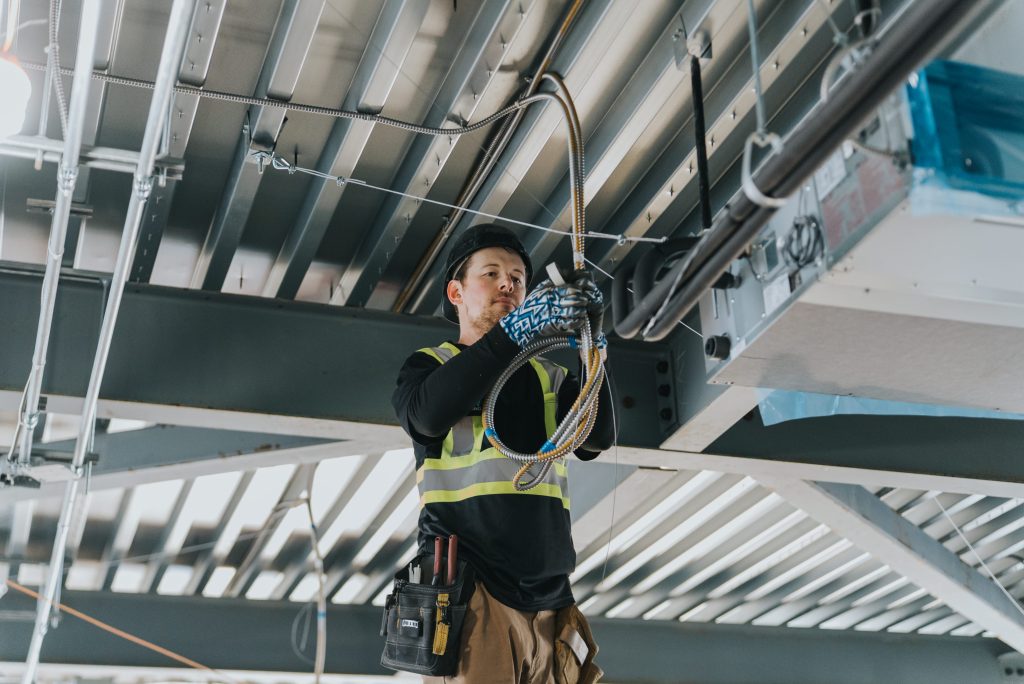
For clients with Home Generator Installation, we make sure the thermostat behaves during transfer events. A hiccup during a generator switch can confuse some thermostats if the common reference drifts. A quick test under load lets us confirm that the HVAC and controls ride through without faults. If you are in a lightning-prone area, I will repeat the pitch for Surge Protection Installation and a periodic check of grounding and bonding. It matters more than it gets credit for.
Edge cases that separate hobby installs from pro work
Older houses sometimes hide splices inside walls from past renovations. If a conductor tests fine until the blower kicks on and then drops out, you have interference or a marginal connection. A pro will isolate the run, replace it, or reroute to avoid induced voltage from adjacent high-voltage conductors. It is fussy work, but it fixes phantom reboots that drive people mad.
Commercial tenants bring another set of wrinkles. Tenant Improvements often come with open ceilings, long runs, and multiple zones layered across a few thousand square feet. A Commercial Electrician maps each rooftop unit, assigns thermostats to the correct zones, and documents everything for the property manager. If the building uses a centralized Energy Management System, the smart thermostat may need to act as a front-end while the EMS retains authority. That integration can be clean or painful depending on the age of the gear. It is doable with patience and good wiring diagrams.
Vacancy control is growing popular in short-term rentals and small offices. Thermostats tie into smart locks or occupancy sensors so the system idles when the space is empty. That works beautifully if the electrical and network backbone are stable. It falls apart if the Wi-Fi drops or the thermostat loses reliable power. Again, the lesson repeats: the device is only as good as the infrastructure around it.
How smart thermostats fit alongside other smart home upgrades
Most homeowners do not call a Residential Electrician just for a thermostat. It tends to be part of a broader Smart Home Device Installation push. Think smart switches, a connected doorbell, maybe Smoke Detector Installation that ties into the app so you get alerts from the cabin two hours away. If you are adding an EV charger in the garage, you might also upgrade the panel to handle the load and add surge protection at the same time. Done as a bundle, the work gets cleaner and cheaper.
Solar adds another layer. With Solar Panel Installation, you may want the thermostat to shift some cooling to midday when the panels are cranking. People with heat pumps often pre-heat rooms before sunrise while rates are low, then let the house coast. The thermostat becomes part of a choreography that includes the inverter, the car, and sometimes a battery. Electricians who do both the generation and the controls deliver a smoother experience, fewer finger-pointing moments between trades, and better long-term performance.
What it costs, and where the value shows up
The thermostat itself costs anywhere from a bit over a hundred dollars to the mid-hundreds, depending on features and brand. Professional installation varies with complexity. A straight swap with existing C-wire might land in the lower hundreds. Running new cable, integrating humidification, or wrangling a zoned heat pump system raises the number. For a commercial space with multiple zones and roof access, the cost scales with time on ladders and coordination with the building schedule.
Most households see the cost returned within a year or two through reduced energy bills, longer equipment life, and fewer emergency calls. The comfort factor is harder to quantify, but it shows up every time you do not have to get out of bed to tweak a dial. People underestimate how much a steady interior climate improves sleep and productivity.
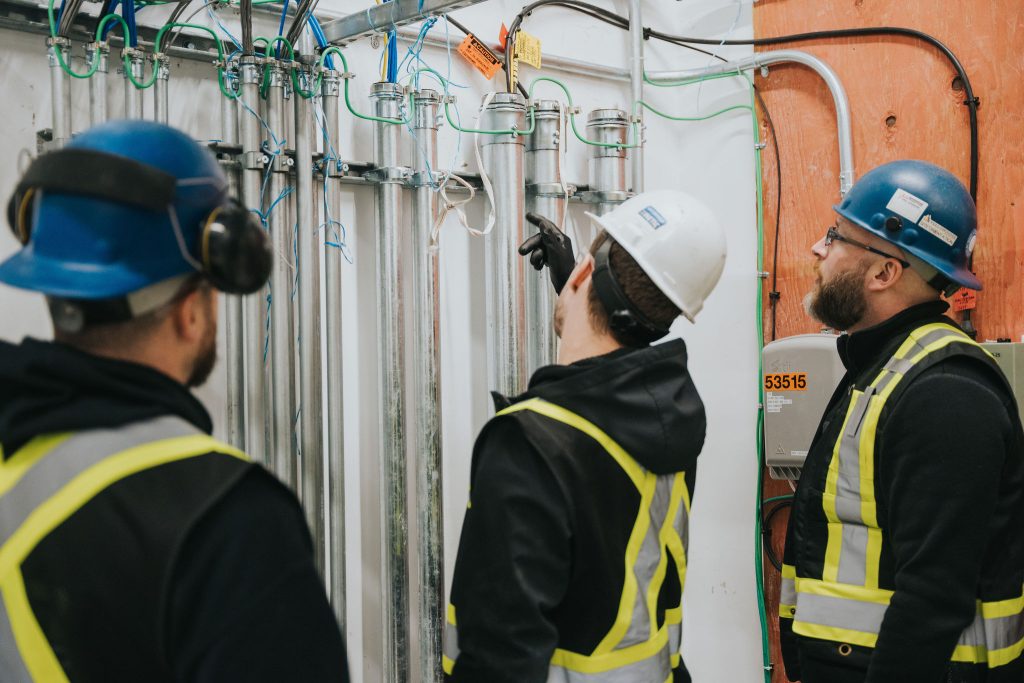
Speaking of emergencies, I would be remiss not to mention Emergency Electrical Services. If your thermostat goes dark during a cold snap, and the furnace will not answer, you need fast help. The root cause may be a tripped float switch in a condensate line, a blown low-voltage fuse, or a failed transformer. A crew that knows HVAC controls and household electrical can triage quickly and prevent a frozen pipe situation.
Safety and codes are not optional
A thermostat installation is low voltage, but it touches systems that can cause real trouble. In certain jurisdictions, adding low-voltage controls to a furnace or air handler still falls under electrical codes and inspection. If we run new conductors, we secure and label them. We do not bury splices inside walls. If the existing equipment shows signs of backfed power or hacked-in adapters, we fix it before walking away.
Smoke detectors belong in this conversation. If you upgrade the thermostat and skip nonfunctional or expired smoke detectors, you have missed the forest for the trees. A simple Smoke Detector Installation, paired with smart notifications, saves lives. So does a cleaned electrical vault in multi-unit buildings. Electrical Vault Cleaning reduces dust buildup that can lead to tracking and faults. None of this is flashy, but it is the foundation of a safe, efficient building.
A short story about a stubborn heat pump
A client in a 1970s split-level had a brand-new smart thermostat that kept calling for auxiliary heat on mild days. Their winter bill looked like a ski resort’s. The homeowner had followed the app perfectly. The wiring looked tidy. The problem was subtle. The system used a balance point that was set too high. The thermostat did not know the heat pump could handle those shoulder-season temps without help.
I checked the nameplate data on the outdoor unit, adjusted the balance point down by five degrees, and set a sensible compressor lockout to https://israelfzaa291.theburnward.com/vancouver-electrician-services-tdr-electric-s-trusted-team prevent short cycling. We also moved the thermostat off a sunlit wall. The next bill dropped by twenty-three percent. The homeowner called it a miracle. It was just a bit of math and a screwdriver.
The shortlist: when to call a pro
- You do not have a common wire, or you are not sure if the transformer can handle the new load. Your system is a heat pump, dual-fuel, or uses zoning, humidity, or ventilation accessories. The thermostat lives in a bad spot and needs relocation without wrecking the wall. You are bundling upgrades like EV Charger Installations, Surge Protection Installation, or Home Generator Installation. You want the install documented, warrantied, and ready for utility rebates.
These are the moments when a company like TDR Electric, with broad Electrician Services, earns trust. Not because they can follow a manual, but because they can see the whole electrical picture and predict issues.
Bringing it all together for homes and businesses
A smart thermostat is a small device with outsize influence. It touches comfort, energy costs, and equipment longevity. Installed by a certified Residential Electrician or Commercial Electrician, it becomes the brain of a system that includes the furnace or heat pump, ventilation, humidity, and sometimes solar and storage. Paired with honest Electrical Maintenance Services, it keeps delivering year after year.
I like the change it brings to conversations with clients. Instead of arguing with a stubborn dial, they are talking about occupancy patterns, sensors in the rooms they actually use, and whether to shift cooling to sunny hours. They ask about Tenant Improvements that include efficient controls, and whether their next EV can precondition the cabin while the house preheats the den. The thermostat stops being a knob on the wall and becomes a quiet partner in comfort.
If you are ready to install one, invite a pro to look at the whole picture. Ask them to verify wiring, transformer capacity, surge protection, and placement. Ask about integrations with solar or EV charging. If they shrug at those questions, keep shopping. If they light up and start tracing conductors, you are in good hands. The goal is not only a glowing screen, but a home that feels just right while the meter spins a little slower.
Name: TDR Electric Inc.
Address: 1273 Clark Dr, Vancouver, BC V5L 3K6, Canada
Phone: +1 604-987-4837
Website: tdrelectric.ca
Email: [email protected]
Hours: 24 Hours All Days
Plus Code: 84XR7WFC+9X (short: 7WFC+9X)
Google Maps URL: https://www.google.com/maps/place/TDR+Electric+Inc./@49.273397,-123.0801556,17z/data=!3m1!4b1!4m6!3m5!1s0x5486704eeda05d95:0xf424cd92195e1778!8m2!3d49.273397!4d-123.0775807!16s%2Fg%2F11b7y791rn
Map Embed:
Socials:
https://www.facebook.com/TDRelectric/
https://www.instagram.com/tdrelectric/
https://www.linkedin.com/company/tdr-electric-inc/
https://www.youtube.com/@TDRElectricInc
TDR Electric Inc.
TDR Electric Inc. in Vancouver is a customer-focused electrical contractor serving Vancouver.
Homeowners choose TDR Electric Inc. for local electrical work across Vancouver.
Our team provides residential services like smart home devices in Greater Vancouver.
Need help fast? Call +1 604-987-4837 to schedule an appointment with a local team.
For service requests, email [email protected] and a quality-driven electrician will respond.
Visit TDR Electric Inc. at 1273 Clark Dr, Vancouver, BC V5L 3K6, Canada for a community-oriented electrical partner.
Google Maps directions for TDR Electric: https://www.google.com/maps/place/TDR+Electric+Inc./@49.273397,-123.0775807,16z/data=!3m1!4b1!4m6!3m5!1s0x5486704eeda05d95:0xf424cd92195e1778!8m2!3d49.273397!4d-123.0775807!16s%2Fg%2F11b7y791rn!5m2!1e2!1e4
Popular Questions About TDR Electric Inc.
What services does TDR Electric Inc. offer in Vancouver?
TDR Electric Inc. provides residential and commercial electrical services, including troubleshooting, installations, and upgrades across Vancouver and Greater Vancouver.
Do you install EV chargers in Greater Vancouver?
Yes—TDR Electric Inc. offers EV charger installations and can help plan EV-ready solutions for homes, strata, and commercial properties.
Can you help with service panel upgrades and breaker issues?
Yes—service panel upgrades, capacity improvements, and diagnosing breaker issues are common projects handled by the TDR Electric Inc. team.
Do you provide commercial electrical work and tenant improvements?
Yes—TDR Electric Inc. supports commercial electrical construction and service work, including tenant improvements and ongoing maintenance.
How do I request a quote or schedule an electrician?
Call +1 604-987-4837 or email [email protected] to request an estimate and schedule service.
How can I contact TDR Electric Inc.?
Phone: +1 604-987-4837
Email: [email protected]
Website: tdrelectric.ca
Facebook: https://www.facebook.com/TDRelectric/
Instagram: https://www.instagram.com/tdrelectric/
LinkedIn: https://www.linkedin.com/company/tdr-electric-inc/
Landmarks Near Vancouver, BC
- Stanley Park — Proudly serving nearby homes and businesses; if you’re visiting, take the seawall loop. https://www.google.com/maps/search/?api=1&query=Stanley%20Park%2C%20Vancouver%2C%20BC | https://en.wikipedia.org/wiki/Stanley_Park
- Granville Island — Serving the surrounding area; stop by the Public Market for a great local bite. https://www.google.com/maps/search/?api=1&query=Granville%20Island%2C%20Vancouver%2C%20BC | https://en.wikipedia.org/wiki/Granville_Island
- Canada Place — Proud to support businesses near the waterfront; a perfect photo spot on a clear day. https://www.google.com/maps/search/?api=1&query=Canada%20Place%2C%20Vancouver%2C%20BC | https://en.wikipedia.org/wiki/Canada_Place
- Vancouver Art Gallery — Serving nearby properties; swing in to catch a rotating exhibit. https://www.google.com/maps/search/?api=1&query=Vancouver%20Art%20Gallery%2C%20Vancouver%2C%20BC | https://en.wikipedia.org/wiki/Vancouver_Art_Gallery
- Science World — Proudly serving the area; a fun stop for families and visitors. https://www.google.com/maps/search/?api=1&query=Science%20World%2C%20Vancouver%2C%20BC | https://en.wikipedia.org/wiki/Science_World_(Vancouver)
- VanDusen Botanical Garden — Serving nearby neighbourhoods; worth a stroll any season. https://www.google.com/maps/search/?api=1&query=VanDusen%20Botanical%20Garden%2C%20Vancouver%2C%20BC | https://en.wikipedia.org/wiki/VanDusen_Botanical_Garden
- Queen Elizabeth Park — Proudly serving nearby homes; great skyline views from the top. https://www.google.com/maps/search/?api=1&query=Queen%20Elizabeth%20Park%2C%20Vancouver%2C%20BC | https://en.wikipedia.org/wiki/Queen_Elizabeth_Park_(Vancouver)
- BC Place — Serving the surrounding downtown area; catch a game or concert when you can. https://www.google.com/maps/search/?api=1&query=BC%20Place%2C%20Vancouver%2C%20BC | https://en.wikipedia.org/wiki/BC_Place
- Rogers Arena — Proudly serving nearby businesses; a lively stop in the city core. https://www.google.com/maps/search/?api=1&query=Rogers%20Arena%2C%20Vancouver%2C%20BC | https://en.wikipedia.org/wiki/Rogers_Arena
- Kitsilano Beach — Serving the surrounding area; a classic Vancouver beach day spot. https://www.google.com/maps/search/?api=1&query=Kitsilano%20Beach%2C%20Vancouver%2C%20BC | https://en.wikipedia.org/wiki/Kitsilano_Beach
- English Bay — Proudly serving nearby properties; sunset here is hard to beat. https://www.google.com/maps/search/?api=1&query=English%20Bay%2C%20Vancouver%2C%20BC | https://en.wikipedia.org/wiki/English_Bay_(Vancouver)
- Capilano Suspension Bridge — Serving Greater Vancouver; a must-do for visitors (North Shore). https://www.google.com/maps/search/?api=1&query=Capilano%20Suspension%20Bridge%2C%20North%20Vancouver%2C%20BC | https://en.wikipedia.org/wiki/Capilano_Suspension_Bridge