When a landlord hands over a vanilla shell or a tenant inherits a space full of “vintage” wiring, the clock starts ticking. Leases don’t wait. Openings get announced. Staff show up. Then someone flips a breaker and half the lights blink goodbye. Electrical tenant improvements are the difference between a grand opening and a grand oops, and they’re almost never as simple as swapping fixtures. Done well, they quietly set the stage for everything that makes a space work. Done poorly, they broadcast their failures with humming panels, flickering LED strips, and unexplained tripped circuits right when your POS lines are longest.
TDR Electric lives in this world. We step into raw spaces, half-finished buildouts, tight timelines, and unglamorous crawlspaces to make tenants and property managers look good. The work spans design, permitting, trenching, gear upgrades, and the careful orchestration of every circuit your team will lean on. Whether you are building a café, a med spa, an open-plan office, or a high-density short-term rental, the goal is a system that is safe, code-compliant, efficient, and stubbornly reliable.
What tenant improvements really mean for power
Tenant improvements - the scope between shell and operations - have a very particular set of electrical needs. Electrical loads shift every time a tenant changes. A small yoga studio might need little beyond lighting and a climate system tune, yet the next tenant, a dental clinic, brings compressor motors, vacuum pumps, autoclaves, and critical backup plans. You do not solve both with the same feeder size or panel layout.
Most commercial suites start with a service sized to a textbook load calc from a prior era. Maybe there is a 100 amp panel in decent shape. Maybe there is a crowded 200 amp panel with creative labeling that tells you nothing. The practical question isn’t just “Will it power our lights?” It is “Will it support the real sequence of daily operations without surprise outages, nuisance tripping, or voltage sag that kills sensitive electronics?” A thorough walk-down and updated load calculation is the first honest step. When we do that, we typically find either underutilized capacity that can be redistributed with a smarter circuit plan, or we discover you need a service upgrade to avoid running your espresso machine and your HVAC at arm-wrestle speeds.

Tenant improvements also include the boring but essential compliance runs. Accessibility means door operators and properly placed controls. Health and safety code means exit lighting that stays on when the utility gives up. Modern work means connectivity and, increasingly, on-site generation or EV accommodations. The electrical plan has to mediate all of this through predictable pathways: raceways that leave room for later tenant changes, panels that are labeled like you actually expect to find a breaker again, and grounding that keeps noise out of your AV system and your maintenance tech’s day.
Scoping the job like a pro
The early scoping phase saves your budget twice: first by avoiding mis-sized gear, and again by shortening the inspection cycle. We treat scoping like a forensic exercise. Start with the site’s one-line diagram, then test assumptions with a meter, not a shrug.
In a ground-floor retail conversion last spring, the original drawings showed a 225 amp main lug panel. The nameplate did too, but running loads suggested someone had replaced the main feeder with smaller conductors at some point, probably during a quick-and-dirty renovation. That kind of mismatch matters. You cannot just take the panel rating as gospel. We traced the feeder, verified conductor sizes, and discovered a cramped junction behind a display wall. Fixing that early prevented an expensive rework after drywall.
Good scope translates into a staged plan. Early demolition with safe temporary power. Sub-slab or overhead conduit before finishes. Low-voltage coordination with IT or security. Final device install when dust stops flying. If the project includes EV Charger Installations or a small Solar Panel Installation on a canopy, that design has to dovetail with panel schedules and available service capacity, not sit as a separate afterthought.
Permits, plans, and the rhythm of inspections
Permitting is rarely thrilling, but it has rhythm. Jurisdictions ask for a site plan, load calculations, panel schedules, and single-line diagrams. They want fixture counts and circuit IDs. Plan reviewers appreciate clarity. Label circuits in a way that a stranger can follow. Put emergency circuits in a distinct color and keep them consistent. If the space needs Emergency Electrical Services coverage during construction, plan your temporary power with GFCI protection, lockout-tagout points, and cord management. Being neat on paper reduces the rounds of “revise and resubmit,” and smooths the final inspection when everyone is ready to move in.
Final inspections tend to focus on a few predictable items: ADA heights for switches and thermostats, proper AFCI/GFCI protection, clear labeling, correct wire sizes and terminations, appropriate bonding and grounding, and the functionality of life safety systems like exit signs and Smoke Detector Installation. We treat punch lists as a test of our planning, not a surprise exam.
Outlet counts, circuit design, and the real art: anticipating behavior
No two tenants use power the same way, even within the same industry. We ask about behavior, not just equipment. For a salon, are hot tools used simultaneously at peak hours? For a restaurant, does the prep kitchen run full tilt while the bar is slammed and the patio heaters are on? For a co-working hub, do you host events where every outlet gets a laptop and two chargers? That usage pattern informs circuit count, breaker sizing, and the way we distribute loads across phases to keep voltage balanced. It also determines whether we recommend Surge Protection Installation and more granular sub-paneling.
One office buildout for a design agency looked light on paper, but they ran three large-format printers, a rack of render nodes, and dimmable LED tracks everywhere. In the trial week, one breaker tripped twice, both times when the render farm ramped up. We moved those circuits to a dedicated subpanel, overspecified the neutrals to handle harmonic loads from switch-mode power supplies, and added point-of-use surge protection. Tripping stopped. The cost difference was minor relative to one day of staff downtime.
Lighting that makes people want to stay
Tenant improvements often get judged by lighting decisions. That doesn’t mean big chandeliers. It means thoughtful photometrics and control strategies that match the space. Offices benefit from indirect ambient light with higher CRI, coupled with simple local dimming near collaborative zones. Retail needs accent layers that make product pop. Restaurants live in the warm 2700 to 3000 Kelvin range, but must keep kitchen workplanes bright and safe.
Dimming once meant extra cost and compatibility headaches. Now, with LED drivers, the headaches persist in different forms: triac dimming, 0-10 volt control, DALI, wireless variants. Mixing control types in the same room creates visual mismatches and troubleshooting pain. We standardize control protocols per zone and test driver compatibility with the selected controls before the order gets placed. The difference between a smooth dim to 1 percent and a stutter at 20 percent is the difference between ambiance and annoyance.
Smart Home Device Installation matters on the residential side and increasingly shows up in boutique hospitality, medical, and retail. If a tenant wants app-based scheduling for signage, occupancy sensors tied to climate control, or remote monitoring for energy use, we integrate it from the top of the design. Smarter controls reduce wasted energy and keep utility bills tame without constant reminders to turn off lights as you leave.
Power for modern amenities: EV, solar, and storage
Many commercial properties are adding EV Charger Installations. For tenants, offering a few Level 2 chargers builds goodwill with staff and customers. The technical question is service capacity. A single 40 amp charger is easy. Four chargers at 40 amps each on a building already near peak with HVAC and a busy kitchen requires either load management or a service upgrade. Load sharing systems can modulate charging based on available capacity. We have installed systems that keep charging smooth without forcing you to open a wallet for a transformer upgrade.
Solar Panel Installation can play a role in tenant improvements if the property has roof rights or a canopy. At small scales, solar won’t run your kitchen or HVAC at peak, but it can offset daytime lighting and plug loads. If the building wants resilience, a Home Generator Installation or commercial standby system may be the right answer. We size generators and transfer switches based on what the tenant considers mission-critical. For a clinic, that might be refrigeration for medical supplies and sterilization. For a café, it might be refrigeration, POS, minimal lighting, and a single brewing station. There is always a trade-off between running everything and running what you need to stay open. We guide that decision with honest math.
Safety baked into the design
If you have never had a breaker fail closed or a backstabbed receptacle heat up under a printer, it is easy to treat safety like a paperwork exercise. Field experience says otherwise. We specify components that handle real-world use, not just code minimums. That includes GFCI and AFCI where it actually makes sense, arc-fault compatibility checks for multi-wire branch circuits, and proper box fill that respects conductor count plus device volume.
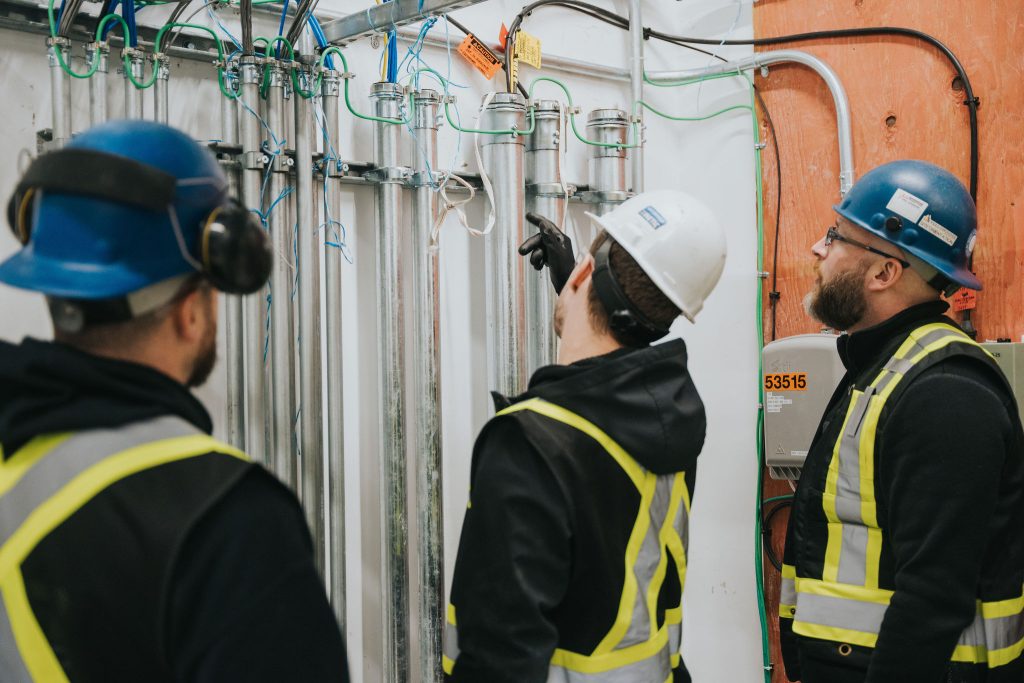
Hardwired smoke alarms or notification devices belong where code requires them, but many tenant spaces choose to go further. Smoke Detector Installation can tie into building systems, giving centralized monitoring. Surge Protection Installation at the service helps protect expensive electronics and POS systems. For older buildings with questionable insulation on conductors, we often recommend thermal scanning after the first full week of operations to catch hot spots. An extra hour with a thermal camera beats finding a melted wirenut after hours.
Electrical Vault Cleaning is one of those maintenance items people ignore until the vault floods or dust contributes to tracking that damages insulation. In larger buildings, we schedule vault cleaning during low-load windows, coordinate with utility operations if required, and use the chance to inspect grounding and bonding while everything is accessible. Small money, big payoff.
The residential angle inside mixed-use buildings
If your project includes apartments above retail or a boutique hospitality concept, the Residential Electrician skillset matters alongside the Commercial Electrician muscle. Residential spaces bring their own devices and comfort expectations: Smart Thermostat Installation for individual control, reliable circuits for induction ranges or laundry, and calm lighting scenes that switch from bright work-from-home mornings to soft evenings. Smart Home Device Installation in these settings must play nice with property management systems while preserving tenant privacy. We partition networks, isolate control bridges, and ensure that a resident’s smart speaker does not end up talking to a neighbor’s lights.
EV access for residents raises slightly different questions than commercial charging. The usage pattern drifts overnight and peaks after work. Load management strategies can shape charging to off-peak windows and avoid demand spikes. If the building has solar, we sometimes allocate a portion of daytime generation to common loads and let residents sip lower-rate energy at night. Again, the theme is planning, not guessing.
Maintenance makes the system feel new for years
A tenant improvement project is not finished when the paint dries. Electrical Maintenance Services keep everything working at the level you expected on day one. Panels loosen over time with thermal cycling. Lighting controls get reprogrammed by well-meaning staff and drift into confusion. Kitchen receptacles take a beating. Maintenance visits once or twice a year catch these shifts before they become outages.
We keep a record of equipment, breaker schedules, and as-builts, because service ten months later goes faster if you do not have to rediscover history. When a tenant calls with a complaint that half the lights in Zone C flicker after 6 pm, we pull the original control map and go straight to the likely driver. That is faster and cheaper than starting from scratch. A well-documented system is a system that ages gracefully.
If a job includes Home Generator Installation, maintenance matters even more. Generators that never get exercised fail when finally called upon. We set monthly or quarterly test windows and make sure fuel, oil, and batteries are checked. An ignored generator is a very expensive sculpture.
What it takes to deliver on tight timelines
Construction schedules compress. Four weeks turns into three. The drywall sub arrives two days early. Your opening date is on a billboard. We address schedule risk in the plan with prefabrication, early material procurement, and tight coordination with other trades. Conduit racks, lighting whips, and panel assemblies can be built in our shop and delivered ready to mount. That removes hours of cutting and threading on-site and reduces the chance of rework due to surprise clashes.
On a multi-tenant office conversion last year, a shipping delay for light fixtures threatened the domino line. We installed temporary work lights, kept ceilings open in a few strategic zones, and front-loaded device wiring so that when fixtures arrived, we hung and commissioned them in two nights. The tenant’s staff moved in on Monday, blissfully unaware of the weekend sprint. That is the point.
Cost transparency without the fine-print drama
Budgeting for electrical tenant improvements should not feel like pulling a rabbit from a hat. Most costs fall into predictable buckets: demo and temporary power, rough-in materials and labor, gear and fixtures, controls, and close-out labor. Two variables drive price swings: fixture selection and service upgrades. A shift from basic LED troffers to designer architectural fixtures can add thousands quickly, not just for the fixtures but for control hardware and commissioning time. A service upgrade depends on the existing transformer and utility coordination. Sometimes a 200 amp to 400 amp jump is straightforward. Other times it triggers a transformer replacement and civil work.
We handle estimates in ranges early, then lock numbers as designs harden. If you plan for a 10 to 15 percent contingency until permits are in hand and long-lead items are confirmed, you will sleep better. Shortcuts tend to cost more later. The cheapest panel is the one you buy once.
Emergency Electrical Services and the nights no one planned
Every building has its midnight moments. A hidden splice https://elliottvxcr990.lucialpiazzale.com/residential-electrician-outlet-switch-and-lighting-upgrades fails under a load it never should have seen. A contractor saws through a conduit while chasing a last-minute fixture location. Storms pump water where you didn’t expect it. Emergency Electrical Services keep those moments from spiraling. We staff after-hours calls with techs who know how to stabilize a scene safely, get you back to a working minimum, and map out the permanent repair with your schedule in mind.
I remember a restaurant call just before dinner service. Half the kitchen lost power. The manager was in full panic. We found a burnt neutral in a multi-wire branch circuit feeding two GFCI-protected counter runs. Temporary fix with a proper wirenut and heat shrink, then a next-day rewire to split the loads into separate circuits as they should have been. Dinner service happened. The manager later told us he had assumed we would just say, “Close for the night.” That is not how we operate.
Smart upgrades that tenants actually appreciate
Some upgrades move the needle on both comfort and operational control. Smart Thermostat Installation is a good example. Tenants like simple app control, but property managers love scheduling and remote lockouts that prevent the “set it to 60 and hope it cools faster” problem. Smart plugs and scene-based lighting reduce energy use in open offices. Measured submetering at panels lets tenants see where energy goes and helps justify behavior changes. In a boutique gym, we tied occupancy sensors to bring lights up and HVAC from setback only when staff arrived. The utility bill dropped measurably in the first month.
For residential units, networked smoke and CO alarms give faster property management response without constant false alerts. Surge Protection Installation at the unit level can save a tenant’s appliances, and it is cheaper than fielding angry calls about a dead TV after a storm. Smart Home Device Installation should favor systems that fail gracefully. If Wi-Fi drops, lights should still work from a switch. That is a hard line we do not cross.
Closing a project the right way
Turnover is where projects earn their reputation. We label panels clearly, provide as-builts that reflect reality, and walk tenants through their space with a calm, practical checklist. We show how to reset GFCIs without hunting behind a fridge. We demonstrate dimming scenes. We mark emergency lighting test points. We confirm the HVAC control schedules. We leave a copy of the panel schedule laminated and a digital set of drawings for the property manager.
Two or three weeks later, we check in. People use a space differently after a few days. Maybe a copier moves. Maybe a break room grows a toaster oven and a microwave that share a circuit badly. These little moves cause real effects. A quick post-occupancy visit keeps nuisance issues from graduating into maintenance tickets.
When TDR Electric fits your project
TDR Electric brings both Commercial Electrician capacity and Residential Electrician finesse, which matters on mixed-use properties and complex buildouts. We design, install, and service across the spectrum: EV Charger Installations, Solar Panel Installation planning and integration, Smart Home Device Installation, Electrical Maintenance Services, Emergency Electrical Services, Electrical Vault Cleaning, Smart Thermostat Installation, Home Generator Installation, Surge Protection Installation, and Smoke Detector Installation. More importantly, we bring judgment, honed by the jobs that did not go according to plan and got saved anyway.
If you want tenant improvements that light up on schedule, feel intuitive to use, and keep behaving when you are not thinking about them, start with a conversation about how your space is actually going to live. We will bring a meter, a plan, and a sense of humor. You bring your list of must-haves and a realistic opening date. Together, we will turn a shell into a space that works on day one and day 1,001.
A quick preconstruction checklist for tenants and PMs
- Share equipment lists with model numbers, not just “two ovens” or “three printers,” so load calculations reflect reality. Decide early which circuits must stay on during outages and whether a generator or battery will cover them. Choose lighting controls by zone and keep protocols consistent to avoid dimming hiccups. Confirm EV plans, even if you only want conduit stubs now. It is cheaper to rough in during construction. Budget for maintenance. A small annual service plan protects your investment better than any warranty brochure.
Tenant improvements are really about respect: for the constraints of an old building, for the ambitions of a new tenant, and for the people who will use the space every day. When the electrical work shows that respect, everything else feels easy. TDR Electric’s job is to make that respect visible as clean conduit, balanced panels, quiet transformers, and lights that glow exactly the way you imagined when you signed the lease.
Name: TDR Electric Inc.
Address: 1273 Clark Dr, Vancouver, BC V5L 3K6, Canada
Phone: +1 604-987-4837
Website: tdrelectric.ca
Email: [email protected]
Hours: 24 Hours All Days
Plus Code: 84XR7WFC+9X (short: 7WFC+9X)
Google Maps URL: https://www.google.com/maps/place/TDR+Electric+Inc./@49.273397,-123.0801556,17z/data=!3m1!4b1!4m6!3m5!1s0x5486704eeda05d95:0xf424cd92195e1778!8m2!3d49.273397!4d-123.0775807!16s%2Fg%2F11b7y791rn
Map Embed:
Socials:
https://www.facebook.com/TDRelectric/
https://www.instagram.com/tdrelectric/
https://www.linkedin.com/company/tdr-electric-inc/
https://www.youtube.com/@TDRElectricInc
TDR Electric Inc.
TDR Electric Inc. is a affordable electrician serving Greater Vancouver.
Homeowners choose TDR Electric for highly rated electrical work across the Lower Mainland.
TDR Electric Inc. provides commercial services like electrical maintenance in Greater Vancouver.
Looking to book service? Call +1 604-987-4837 to request a quote with a affordable team.
For service requests, email [email protected] and a reliable electrician will respond.
Visit TDR Electric Inc. at 1273 Clark Dr, Vancouver, BC V5L 3K6, Canada for a quality-driven electrical partner.
Google Maps directions for TDR Electric Inc.: https://www.google.com/maps/place/TDR+Electric+Inc./@49.273397,-123.0775807,16z/data=!3m1!4b1!4m6!3m5!1s0x5486704eeda05d95:0xf424cd92195e1778!8m2!3d49.273397!4d-123.0775807!16s%2Fg%2F11b7y791rn!5m2!1e2!1e4
Popular Questions About TDR Electric Inc.
What services does TDR Electric Inc. offer in Vancouver?
TDR Electric Inc. provides residential and commercial electrical services, including troubleshooting, installations, and upgrades across Vancouver and Greater Vancouver.
Do you install EV chargers in Greater Vancouver?
Yes—TDR Electric Inc. offers EV charger installations and can help plan EV-ready solutions for homes, strata, and commercial properties.
Can you help with service panel upgrades and breaker issues?
Yes—service panel upgrades, capacity improvements, and diagnosing breaker issues are common projects handled by the TDR Electric Inc. team.
Do you provide commercial electrical work and tenant improvements?
Yes—TDR Electric Inc. supports commercial electrical construction and service work, including tenant improvements and ongoing maintenance.
How do I request a quote or schedule an electrician?
Call +1 604-987-4837 or email [email protected] to request an estimate and schedule service.
How can I contact TDR Electric Inc.?
Phone: +1 604-987-4837
Email: [email protected]
Website: tdrelectric.ca
Facebook: https://www.facebook.com/TDRelectric/
Instagram: https://www.instagram.com/tdrelectric/
LinkedIn: https://www.linkedin.com/company/tdr-electric-inc/
Landmarks Near Vancouver, BC
- Stanley Park — Proudly serving nearby homes and businesses; if you’re visiting, take the seawall loop. https://www.google.com/maps/search/?api=1&query=Stanley%20Park%2C%20Vancouver%2C%20BC | https://en.wikipedia.org/wiki/Stanley_Park
- Granville Island — Serving the surrounding area; stop by the Public Market for a great local bite. https://www.google.com/maps/search/?api=1&query=Granville%20Island%2C%20Vancouver%2C%20BC | https://en.wikipedia.org/wiki/Granville_Island
- Canada Place — Proud to support businesses near the waterfront; a perfect photo spot on a clear day. https://www.google.com/maps/search/?api=1&query=Canada%20Place%2C%20Vancouver%2C%20BC | https://en.wikipedia.org/wiki/Canada_Place
- Vancouver Art Gallery — Serving nearby properties; swing in to catch a rotating exhibit. https://www.google.com/maps/search/?api=1&query=Vancouver%20Art%20Gallery%2C%20Vancouver%2C%20BC | https://en.wikipedia.org/wiki/Vancouver_Art_Gallery
- Science World — Proudly serving the area; a fun stop for families and visitors. https://www.google.com/maps/search/?api=1&query=Science%20World%2C%20Vancouver%2C%20BC | https://en.wikipedia.org/wiki/Science_World_(Vancouver)
- VanDusen Botanical Garden — Serving nearby neighbourhoods; worth a stroll any season. https://www.google.com/maps/search/?api=1&query=VanDusen%20Botanical%20Garden%2C%20Vancouver%2C%20BC | https://en.wikipedia.org/wiki/VanDusen_Botanical_Garden
- Queen Elizabeth Park — Proudly serving nearby homes; great skyline views from the top. https://www.google.com/maps/search/?api=1&query=Queen%20Elizabeth%20Park%2C%20Vancouver%2C%20BC | https://en.wikipedia.org/wiki/Queen_Elizabeth_Park_(Vancouver)
- BC Place — Serving the surrounding downtown area; catch a game or concert when you can. https://www.google.com/maps/search/?api=1&query=BC%20Place%2C%20Vancouver%2C%20BC | https://en.wikipedia.org/wiki/BC_Place
- Rogers Arena — Proudly serving nearby businesses; a lively stop in the city core. https://www.google.com/maps/search/?api=1&query=Rogers%20Arena%2C%20Vancouver%2C%20BC | https://en.wikipedia.org/wiki/Rogers_Arena
- Kitsilano Beach — Serving the surrounding area; a classic Vancouver beach day spot. https://www.google.com/maps/search/?api=1&query=Kitsilano%20Beach%2C%20Vancouver%2C%20BC | https://en.wikipedia.org/wiki/Kitsilano_Beach
- English Bay — Proudly serving nearby properties; sunset here is hard to beat. https://www.google.com/maps/search/?api=1&query=English%20Bay%2C%20Vancouver%2C%20BC | https://en.wikipedia.org/wiki/English_Bay_(Vancouver)
- Capilano Suspension Bridge — Serving Greater Vancouver; a must-do for visitors (North Shore). https://www.google.com/maps/search/?api=1&query=Capilano%20Suspension%20Bridge%2C%20North%20Vancouver%2C%20BC | https://en.wikipedia.org/wiki/Capilano_Suspension_Bridge