Walk into any office that still hums under old fluorescents and you can feel the drag. It is the visual equivalent of dial-up internet. The light is flat, the ballasts whine, and your maintenance team keeps a drawer of spare tubes like a first aid kit. Now compare that to a shop floor running bright, crisp LEDs that wake up instantly, or a lobby that shifts tone through the day to match daylight and reduce fatigue. Same building type, wildly different experience. That is the promise of a smart lighting upgrade and a well planned energy retrofit: fewer headaches, more control, and a power bill that acts like it found a gym.
Commercial electricians live in that space where practical goals meet code, budgets, and the realities of old buildings. Yes, aesthetics matter, but so do panel schedules, fixture spacing, glare on monitors, warranty fine print, and the fact that the tenant moves out in six months. Companies like TDR Electric see the same patterns across office towers, retail bays, light industrial, and hospitality. The stakes are simple. Do it right, and you pocket energy savings for a decade. Do it wrong, and you inherit a system that is either too complicated to use or too flimsy to depend on.
Where the kWh really go
If you are trying to prioritize upgrades, start with load breakdown. A typical small office might see lighting at 20 to 30 percent of total energy use, HVAC at 35 to 50 percent, and plug loads making up the rest. Warehouses are different, especially high-bay storage where lighting can chew through 40 percent of the bill if the fixtures run for long shifts. Retail often values presentation, so accent lighting and display cases can skew higher than you expect. Restaurants are another universe altogether.
An experienced Commercial Electrician looks at operating hours first, then ceiling height, controls, and maintenance access. Long hours and tall ceilings tilt the math strongly toward LED conversion, occupancy controls, and durable fixtures. If a scissor lift visit costs a few hundred dollars and interrupts production, you want lumen maintenance for years, not months. That is where Electrical Maintenance Services earn their keep, too. Fewer site visits, fewer burned out lamps, and a lighting schedule that does not need a watchmaker to adjust.
LEDs, but make them right
Everyone knows LEDs are efficient. The trick is avoiding the cheap stuff that flickers, shifts color, or drops off early because the driver was an afterthought. When you hear a pro ask for LM-79 and LM-80 data, they are not being pedantic. They are making sure the photometrics and life claims are credible. And if you have employees staring at screens, pay attention to flicker percentage and color rendering. It is not just how bright a space looks. It is whether people squint at 3 p.m. and whether colors look trustworthy in a retail environment.
For high ceilings, consider linear high-bays with optics tuned to your aisle layout. For offices, architectural troffers with edge-lit panels spread light evenly and reduce glare. For parking structures, choose fixtures with integral motion sensors and daylight harvesting, tied into a centralized control backbone. Many retrofits avoid rewiring by using wireless relay packs and room controllers. That can be a lifesaver in finished spaces, but it also adds radios to https://jaidencxjc572.fotosdefrases.com/emergency-electrical-services-rapid-dispatch-throughout-vancouver your ecosystem. Get a clear plan for commissioning and network security, or you will inherit a forest of devices that no one can identify a year later.
Controls: the part everyone forgets until it breaks
Lighting controls range from stupid simple to PhD level. A wall switch on a circuit is controls. So is a cloud-linked building management system with demand response capabilities, smart scheduling, and energy dashboards. The right choice has less to do with what is fashionable and more to do with who is going to run it on Tuesday afternoon when the schedule needs an update.
In a smaller tenant space, room-based controls with local occupancy sensors and dimming give you 60 to 80 percent of the benefit without the headache of enterprise networking. You can set scenes, harvest daylight near windows, and meet code in most jurisdictions. In a large campus, networked controls pay off because you gain global oversight and demand response options. When the utility calls for curtailment, the building can shed lighting load by 10 to 20 percent without anyone noticing. That is real money in incentive markets.
A commercial electrician who has done this a few dozen times knows the failure modes. Occupancy sensors aimed incorrectly so that people wave just to keep the lights on. Scenes that are too dramatic for everyday work. Daylight tuning that overcompensates on cloudy afternoons. The fix is straightforward. Commission on a regular workday, not at midnight. Walk the floor with real users and get feedback. The best control systems feel invisible because they match behavior rather than fight it.
The retrofit path: audit, design, incentives, install, verify
A good energy retrofit does not start with a catalog of fixtures. It starts with a walkthrough and data. How is the space used hour by hour? What is on emergency circuits? Where are the panel capacities tight? Are there code triggers if we touch more than 40 percent of the luminaires? A seasoned Commercial Electrician or project manager takes photos of every panel schedule, notes ceiling construction, and flags any asbestos ceiling tiles or fire-rated assemblies. Surprises are the enemy of tight budgets.
Design should produce photometric layouts, fixture schedules, and a one-line diagram if distribution changes are required. Controls should have a narrative of operation written in plain English so the end user knows what is supposed to happen in each zone.
This is also the point to chase incentives. Utilities love to pay for lighting efficiency because it is fast and verifiable. Prescriptive rebates are common for LED high-bays, troffers, and exterior pole lights. Custom incentives are available for networked controls or large kWh reductions. Paperwork takes time, so assign it early. Someone has to collect model numbers, cut sheets, and installation photos. Teams like TDR Electric often bundle this into their scope because they know the dance.
Installation sequencing matters. In occupied offices, swap fixtures after hours and prewire controls where practical. In a warehouse, you can run two lifts in tandem and move down aisles like a zipper. Punch list the next day, not the next month. Verification is not just a photo of a new light. Log a week of operation, check schedules, and confirm emergency egress paths are fully illuminated on backup power. If you promised 50 percent savings, get a baseline and post upgrade bills lined up for comparison. The math should hold within 10 to 15 percent, accounting for seasonal shifts.
The grip of codes and the reality of old gear
Energy codes often require automatic shutoff and daylighting in certain zones. They also mandate efficacy thresholds and control readiness. Local amendments can change the details. It is easy to spend money chasing compliance features that no one will use. The goal is to meet code with a solution that people can live with. For example, open office areas near perimeter windows will need daylight zoning. Instead of individual sensors that create a patchwork of dim pools, a well placed continuous dimming sensor tied to a zone controller can smooth the effect.
Old buildings complicate things. Panels are full, neutrals are shared, and there is a rogue circuit someone added in 1998 that feeds an ice maker and a copier. That is where Electrical Maintenance Services overlap with retrofit work. Clean up panel schedules. Label everything. If you are touching distribution, consider Surge Protection Installation at the service or distribution level, especially if sensitive controls are going in. A transient voltage event can fry drivers and controls faster than you can say warranty claim.
And do not ignore life safety. If you swap out fixtures that provide path of egress lighting, keep the emergency circuits intact and prove your new fixtures hit required footcandle levels. Test for 90 minutes on backup power if code requires. It is not just compliance, it is liability.
Beyond lighting: the retrofit stack
Lighting is often the first domino. Once you have a control backbone and a more efficient baseline, the next layers fall into place.
Smart Thermostat Installation can trim HVAC runtimes, especially in small suites that do not warrant a full BMS. When paired with occupancy data from lighting sensors, you can reduce conditioning in zones that sit empty after 6 p.m.
EV Charger Installations are creeping into every parking garage and employee lot. They are not purely an energy retrofit, but they intertwine with load management. A capable Commercial Electrician can install Level 2 chargers with load sharing to avoid expensive service upgrades. If your building’s main service is near its limit, plan EV capacity in stages. The most common mistake is placing chargers where the trenching is cheap but the load balancing is impossible.
Solar Panel Installation can offset common area loads, especially in low-rise campuses with generous roof space. Pair it with energy storage or a Home Generator Installation equivalent at the commercial scale if you need resilience. While “home” suggests residential, the principle carries over. In mixed-use buildings, a Residential Electrician on the same team can coordinate meter splits and ensure tenants do not subsidize common loads by accident.
Smart Home Device Installation sounds residential, but many of those devices, or their commercial cousins, have a place in small businesses. Think smart relays for back-of-house lighting, smart plugs for signage, or cloud monitored refrigeration. The trick is standardization. Choose platforms that play well together, and keep credentials in a secure, shared repository so your facilities team is not locked out when someone leaves the company.
Dirty jobs that save uptime
One of the least glamorous tasks with outsized impact is Electrical Vault Cleaning. Dust and moisture build up in underground vaults and mechanical rooms. You would be surprised how many nuisance trips and corrosion issues trace back to grime. A scheduled cleaning with appropriate lockout procedures and environmental controls reduces downtime risks. It is hard to quantify until a medium voltage splice fails on a weekday morning. Then you count the hours until power returns.
Another quiet hero is Smoke Detector Installation and its regular testing. Retrofit work often kicks up dust that fouls detectors. A good electrician coordinates with the fire alarm vendor to isolate zones during construction and restore them with verification. Miss that step and you will either live with false alarms or overbypass a system, neither of which ends well.
Tenant improvements and the chessboard they create
Landlords juggle shifting tenants, each with a different brand package and schedule. The best lighting upgrade anticipates churn. Use flexible track for accent zones in retail bays. Keep emergency and base lighting circuits separate from tenant panelboards where practical. During Tenant Improvements, run spare conduits while ceilings are open. A few empty pathways now can save thousands later when the next tenant wants pendant clusters over a cash wrap or a digital wall that needs dedicated circuits.
Dimming protocols deserve attention here. If you mix 0 to 10 V dimming with phase dimming and DALI on the same job, plan the interfaces cleanly. Keep a record of driver types. When a tenant swaps fixtures, you will know whether the existing control loop plays nice or not.
Budget sanity: what good projects cost
Ranges help, even if every building is different. An LED retrofit of office troffers with basic room controls often lands in the 3 to 7 dollars per square foot range, before incentives. High-bay warehouse conversions with networked sensors might run 4 to 9 dollars per square foot depending on lift access and controls. Exterior pole light conversions sit anywhere from 500 to 1,500 dollars per pole, influenced by fixture choice and pole condition.
EV Charger Installations for Level 2 units usually stretch from 4,000 to 12,000 dollars per port installed, wildly variable due to trenching, panel capacity, and network fees. Solar Panel Installation costs moved a bit in recent years, but commercial rooftop systems still often price between 1.30 and 2.00 dollars per watt before incentives when scaled efficiently.
The soft costs matter. Design, commissioning, permits, and, if you are chasing rebates, admin time. A shop like TDR Electric typically bakes those into a turnkey number. Smaller outfits may break them out. Either way, ask for a clear SOW and a commissioning plan in writing.
Safety, downtime, and the 2 a.m. phone call
No one wants to stop production for a lighting upgrade. A seasoned crew will phase work and isolate circuits so your operations keep moving. That said, some tasks need shutdowns. Communicate these early. If the main has to be de-energized to install a new feeder or a Surge Protection Installation at the service, schedule it with breathing room. Bring a load bank for generator testing if you rely on backup power. After a couple of decades around live gear, you get superstitious about testing everything twice.
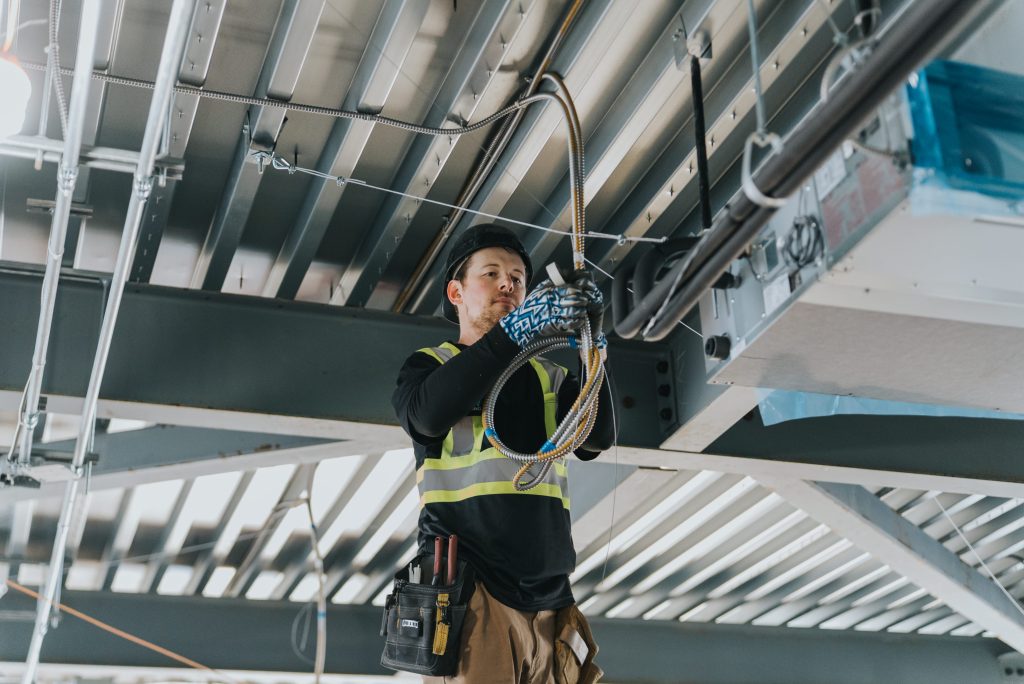
Emergency Electrical Services exist for a reason. Even the best plan meets reality. A forklift clips a conduit. A driver firmware update goes sideways. A storm throws debris into an exterior transformer. The difference between a small hiccup and a disaster is often the phone number you can call that gets a human at any hour. If you are picking vendors, ask what their after-hours coverage truly looks like. Not the brochure version, the real one.
Human factors: the part spreadsheets underestimate
People do better in good light. You can feel it in a conference room where faces are clear, wall monitors are legible without glare, and the dimming curve lets you fine tune during presentations. In retail, accurate color rendering makes merchandise look honest. In industrial zones, vertical footcandles matter because workers read labels on shelves, not just the floor. And for everyone, warm tone in breakout areas and restrooms makes a space feel hospitable. These choices are not fluff. They affect error rates, sales, and brand perception.
Here is a small example. We once swapped a hodgepodge of troffers in a call center for uniform, edge-lit panels tuned to 4000 K and added occupancy sensors with a generous timeout. Complaints about “buzzing lights” vanished, absenteeism ticked down a hair, and the facilities manager stopped using her ladder every Friday. Did we measure every variable in a lab? No. Could you feel the change? Absolutely. Multiply that across a portfolio and the intangible benefits add up.
Choosing the right electrician, and what to ask
Electrician Services look similar on a website. The difference shows up during kickoff and again at commissioning. A few questions sharpen the picture:
- Can you provide photometric layouts and a written sequence of operations for controls? How do you handle commissioning and user training, and who owns the control credentials? What is your plan for rebate paperwork, inspection scheduling, and as-built documentation? How will you protect ongoing operations, and what is the downtime schedule? What warranties cover fixtures, drivers, and controls, and who manages claims if something fails?
Those five answers reveal process maturity. If a contractor shrugs at commissioning, expect headaches. If they have a naming convention for devices and a handoff binder, breathe easy.
Maintenance after the ribbon cutting
Once the lights are on and the photos go on LinkedIn, the real work begins. Plan a six month and twelve month check. Sensor drift, time changes, and space reconfigurations all chip away at performance. Electrical Maintenance Services that include periodic control health checks, firmware updates, and emergency lighting tests keep the system performing like day one.
Surge events, even if rare, can age LED drivers silently. If you skipped Surge Protection Installation at first, consider it during the first annual review. The cost is modest compared to a swath of premature driver failures. Keep spare drivers and a labeled stock of critical fixtures on site for facilities teams. Nothing kills momentum like waiting three weeks for a proprietary driver module.

Where residential know-how crosses over
Mixed-use properties and campus environments blur the line between commercial and residential. A Residential Electrician on the same team as your commercial crew can streamline condo lobbies, amenity spaces, and townhouse retail hybrids. Smart Thermostat Installation inside tenant suites, Smoke Detector Installation that dovetails with base building systems, and even small generators for ground-floor retail bays all benefit from that crossover. It is the same craft, just different scales and codes.
Why retrofits keep paying dividends
A well executed lighting upgrade and energy retrofit delivers a double return. You pocket energy savings immediately, often north of 30 percent, and you reduce maintenance calls. Less heat in the ceiling means HVAC works a little easier. Better controls shave peaks and open doors to utility incentives. Staff work in a space that looks and feels contemporary. And when the next evolution comes along, you have a backbone in place. Adding a few EV chargers or integrating occupancy data into your HVAC strategy becomes an afternoon of commissioning instead of a month of jackhammers.
That compound effect is why owners who take a portfolio mindset tend to move faster after the first project. They see one building stabilize, then roll the playbook to the others, tailoring for each site. Teams like TDR Electric make that repeatability possible because they carry lessons learned from site to site, whether that is a downtown office tower or a distribution center near the highway.
A closing circuit
There is a lot of romance in talking about smart buildings, yet the real wins are stubbornly practical: a ballast you never have to replace again, a control schedule someone can actually edit, and an energy bill that trends lower quarter after quarter. Pick your partners wisely. Ask for clarity instead of flash. Keep the maintenance crew in the room during design. Respect the codes, and then design for the humans who live under the lights.
Do that, and your retrofit becomes more than a project. It becomes the baseline for how you operate, maintain, and improve your buildings. The lights are brighter, the space feels sharper, and the power meter stops spinning quite so fast. That is progress you can see from the parking lot, where the new LEDs greet you with a steady beam and the EV chargers sip power without tripping the main. All wired with care, all built to last.
Name: TDR Electric Inc.
Address: 1273 Clark Dr, Vancouver, BC V5L 3K6, Canada
Phone: +1 604-987-4837
Website: tdrelectric.ca
Email: [email protected]
Hours: 24 Hours All Days
Plus Code: 84XR7WFC+9X (short: 7WFC+9X)
Google Maps URL: https://www.google.com/maps/place/TDR+Electric+Inc./@49.273397,-123.0801556,17z/data=!3m1!4b1!4m6!3m5!1s0x5486704eeda05d95:0xf424cd92195e1778!8m2!3d49.273397!4d-123.0775807!16s%2Fg%2F11b7y791rn
Map Embed:
Socials:
https://www.facebook.com/TDRelectric/
https://www.instagram.com/tdrelectric/
https://www.linkedin.com/company/tdr-electric-inc/
https://www.youtube.com/@TDRElectricInc
TDR Electric Inc.
TDR Electric Inc. in Vancouver is a community-oriented electrical contractor serving Vancouver and surrounding areas.
Homeowners choose TDR Electric for experienced electrical work across the Lower Mainland.
Our team provides commercial services like service panel upgrades in Greater Vancouver.
Looking to book service? Call +1 604-987-4837 to request a quote with a community-oriented team.
For service requests, email [email protected] and a quality-driven electrician will respond.
Visit TDR Electric at 1273 Clark Dr, Vancouver, BC V5L 3K6, Canada for a local electrical partner.
Google Maps directions for TDR Electric Inc.: https://www.google.com/maps/place/TDR+Electric+Inc./@49.273397,-123.0775807,16z/data=!3m1!4b1!4m6!3m5!1s0x5486704eeda05d95:0xf424cd92195e1778!8m2!3d49.273397!4d-123.0775807!16s%2Fg%2F11b7y791rn!5m2!1e2!1e4
Popular Questions About TDR Electric Inc.
What services does TDR Electric Inc. offer in Vancouver?
TDR Electric Inc. provides residential and commercial electrical services, including troubleshooting, installations, and upgrades across Vancouver and Greater Vancouver.
Do you install EV chargers in Greater Vancouver?
Yes—TDR Electric Inc. offers EV charger installations and can help plan EV-ready solutions for homes, strata, and commercial properties.
Can you help with service panel upgrades and breaker issues?
Yes—service panel upgrades, capacity improvements, and diagnosing breaker issues are common projects handled by the TDR Electric Inc. team.
Do you provide commercial electrical work and tenant improvements?
Yes—TDR Electric Inc. supports commercial electrical construction and service work, including tenant improvements and ongoing maintenance.
How do I request a quote or schedule an electrician?
Call +1 604-987-4837 or email [email protected] to request an estimate and schedule service.
How can I contact TDR Electric Inc.?
Phone: +1 604-987-4837
Email: [email protected]
Website: tdrelectric.ca
Facebook: https://www.facebook.com/TDRelectric/
Instagram: https://www.instagram.com/tdrelectric/
LinkedIn: https://www.linkedin.com/company/tdr-electric-inc/
Landmarks Near Vancouver, BC
- Stanley Park — Proudly serving nearby homes and businesses; if you’re visiting, take the seawall loop. https://www.google.com/maps/search/?api=1&query=Stanley%20Park%2C%20Vancouver%2C%20BC | https://en.wikipedia.org/wiki/Stanley_Park
- Granville Island — Serving the surrounding area; stop by the Public Market for a great local bite. https://www.google.com/maps/search/?api=1&query=Granville%20Island%2C%20Vancouver%2C%20BC | https://en.wikipedia.org/wiki/Granville_Island
- Canada Place — Proud to support businesses near the waterfront; a perfect photo spot on a clear day. https://www.google.com/maps/search/?api=1&query=Canada%20Place%2C%20Vancouver%2C%20BC | https://en.wikipedia.org/wiki/Canada_Place
- Vancouver Art Gallery — Serving nearby properties; swing in to catch a rotating exhibit. https://www.google.com/maps/search/?api=1&query=Vancouver%20Art%20Gallery%2C%20Vancouver%2C%20BC | https://en.wikipedia.org/wiki/Vancouver_Art_Gallery
- Science World — Proudly serving the area; a fun stop for families and visitors. https://www.google.com/maps/search/?api=1&query=Science%20World%2C%20Vancouver%2C%20BC | https://en.wikipedia.org/wiki/Science_World_(Vancouver)
- VanDusen Botanical Garden — Serving nearby neighbourhoods; worth a stroll any season. https://www.google.com/maps/search/?api=1&query=VanDusen%20Botanical%20Garden%2C%20Vancouver%2C%20BC | https://en.wikipedia.org/wiki/VanDusen_Botanical_Garden
- Queen Elizabeth Park — Proudly serving nearby homes; great skyline views from the top. https://www.google.com/maps/search/?api=1&query=Queen%20Elizabeth%20Park%2C%20Vancouver%2C%20BC | https://en.wikipedia.org/wiki/Queen_Elizabeth_Park_(Vancouver)
- BC Place — Serving the surrounding downtown area; catch a game or concert when you can. https://www.google.com/maps/search/?api=1&query=BC%20Place%2C%20Vancouver%2C%20BC | https://en.wikipedia.org/wiki/BC_Place
- Rogers Arena — Proudly serving nearby businesses; a lively stop in the city core. https://www.google.com/maps/search/?api=1&query=Rogers%20Arena%2C%20Vancouver%2C%20BC | https://en.wikipedia.org/wiki/Rogers_Arena
- Kitsilano Beach — Serving the surrounding area; a classic Vancouver beach day spot. https://www.google.com/maps/search/?api=1&query=Kitsilano%20Beach%2C%20Vancouver%2C%20BC | https://en.wikipedia.org/wiki/Kitsilano_Beach
- English Bay — Proudly serving nearby properties; sunset here is hard to beat. https://www.google.com/maps/search/?api=1&query=English%20Bay%2C%20Vancouver%2C%20BC | https://en.wikipedia.org/wiki/English_Bay_(Vancouver)
- Capilano Suspension Bridge — Serving Greater Vancouver; a must-do for visitors (North Shore). https://www.google.com/maps/search/?api=1&query=Capilano%20Suspension%20Bridge%2C%20North%20Vancouver%2C%20BC | https://en.wikipedia.org/wiki/Capilano_Suspension_Bridge